I haven’t written a post on this blog for too long. I’ve been busy. An edited volume for my work at the Jane Addams Papers. The promotion all summer of my own book Loving Lincoln. An intense yoga-training course. And doom scrolling because the world is crazy and I am so damned sad about it. Yet this is the hardest time of the year for my personal grief, and I need to write. Last Saturday morning, Mack popped up louder than usual. She knew that I was overtired and faltering.
And so, Mack and I have been on a weeklong retreat together in my mind, and she’s got me thinking. About me a little bit, but mostly about the crazy world that is making me sad. Her presence in my thoughts and in my aching heart space has me pondering where we are and who we are in America. About what I revere about my country. About what I would change if I could change anything to heal all the fractures I see. About what we all need to do to get through this shocking, terrifying time in our history.

I am grateful to Mack’s good spirit for inspiring the conversation and making me find my words. She’s good at that, my Mack, at nudging me back to my writing, my remedy, the only way I know to untie the emotional knots of my fragile, beautiful condition of being human.
Deep breath in…
Long sweet exhale…
Now, let’s talk.
**********
Every single human being wants and deserves a comfortable place to live, good food, and good health; they want to be able to pursue a productive passion, to be safe, and to feel a sense of belonging. All human beings want those simple comforts and pleasures for their families and for their friends.
Compassionate human beings also want those simple comforts and pleasures for ALL people—no matter their gender, race, religion, politics, sexual orientation, economic situation, or immigration status, and no matter that we might not know those people or understand them.
Selfish human beings care only about themselves and their own kind and are willing to demonize others to allegedly protect themselves and those they define as worthy.
The United States is not perfect. It has never been perfect. As a historian of the American past, I could regale you for hours with stories about how we grossly failed to live up to our ideals. Yet the United States of America, a nation of dreamers and immigrants and brave free-thinkers, is a great country because of its diversity, ingenuity, eclectic variety of souls, and lofty, albeit sometimes faltering, aspirations. American democracy—despite all the ways it could be better, despite all the ways it has left people behind—is the best form of government on the face of this earth.
Why else do so many immigrants dream of life in America? Why has the United States for the last 80 years been such an inspirational force throughout the world? Our freedoms and our Constitution, yes. Our legal and educational institutions, yes. Our affluence, yes. But in great part the reason the American experiment has endured and inspired freedom-seeking people around the globe is because America is a free country made up of mostly generous, kind, and hard-working people. People who want to live their own lives in peace and let other people live their own lives in peace. People who care about the wellbeing of their communities, their states, and their country. People who want to feed starving children around the world. People who want to help people facing catastrophes like hurricanes or genocide. People like my working-class American grandfather, who put his body in harm’s way and endured the horrors of the battlefield to liberate Europeans from the Nazis.
I am not willing to give up on America, and I think most Americans are not ready to give up, either. But as our country is imperfect, so is our politics. Political discourse is ugly right now and political norms have been broken. I know many people are feeling fear and despair; and that fear and despair is not crazy, it is real. The political party in power rejects democratic standards of negotiation and compromise, and it has committed itself to policies that protect only like-minded people, rejecting an ethos of compassion for the vulnerable people among us. The opposition party consists of many individuals who have taken far more than their fair share, have clung too long to their power, and have propped up companies and policies that have harmed people, even as they have voted to ensure the basic human rights and comforts of the vulnerable.
I am an unapologetic political partisan; I have always been a liberal Democrat, and I believe with all my heart and my brains that if we want to save our country from the authoritarian threat we are facing, we need to elect Democrats to public office at every level of government. It is abundantly clear that the party in power disrespects the Constitution and is trying to dismantle our democracy. The Republican Party is an existential threat to American democracy and to our inspirational standing in the world.
We are in a full-fledged political crisis. But I also believe that this is not merely a political crisis that we are facing. This is a moral crisis. This is a humanitarian crisis. This is a fight not only for freedom and democracy and justice for all people, but it is also a fight for the soul of America.
Good Americans look out for their neighbors, and they care about people they don’t know. If we are going to save our democracy and write the next, better chapter of our democracy, we need to remember that at the root of everything we do for good in the world is love and compassion and the idea that all human beings deserve security and dignity and peace to pursue their own, individual happiness.
If you believe that some people because of their immigration status or their gender or their difference in any way makes them unworthy of rights and compassion, then you need to have your version of a come-to-Jesus meeting. If you are demonizing others to make yourself feel better about the deportations or to justify your hatred of mythical liberal demons, you need to look in the mirror to inspect yourself for horns. If you are supporting political candidates who believe due process and the rule of law don’t apply to all people equally, then you need to ask yourself if you really wish to live in a democracy at all.
Because here is a little truth for you: there will ultimately be no freedom for you if there is no freedom for your neighbor. Your right to pray to your god or to love who you love or to pursue your happiness in peace is impossible if you stand in the way of another person’s right to pray to their god or love who they love or pursue their happiness in peace. If you support leaders who hurt people and talk about human beings like they are animals or monsters, you are no better than they are.
I don’t wish to deny you your American right to advocate for immigration reform, for example, or to reduce or reform government agencies and policies. I believe in democracy and free speech and the civil exchange of different ideas. But when you advocate for the things you want at the expense of humanitarian concerns and, in the end, at the expense of your own humanity, you will fail every time to create anything that is lasting and good.
If we are going to save our democracy and move forward with a bigger and bolder vision of what American democracy can be and could accomplish, which I think we will do, we have to start from a base of compassion and human decency for all the people in our country right now, whether they are citizens or not. For the sake of our human souls as well as for the soul of our democracy, we need to take care of people who are living in fear of our government, who are in danger of losing their freedoms and their American lives. We need to fill up our bodies with love, despite our vast differences, and stand up to the authoritarians who are trying to destroy everything that is good in America.
And, here’s the thing about authoritarians: every damned one of them is a bully. And bullies are cowards. They are weak, and they have to punch down to feel good about themselves. All we have to do is declare our allegiance to every proverbial little kid who is getting pummeled for his lunch money. It might be scary, but if all the good and compassionate Americans stand up and stare down the bully, the bully doesn’t stand a chance in hell of survival.
The path forward won’t be easy, but it is very simple.
Do you want to be a bully or a protector of the bullied? Do you want to live in a democracy that cares about people or a dictatorship that doesn’t care about anything or anybody?
Like I said, this is a moral crisis. This is a humanitarian crisis. This is a question about who we are in our hearts as human beings and who we are and will be as Americans.
I know what side I am on. Do you?

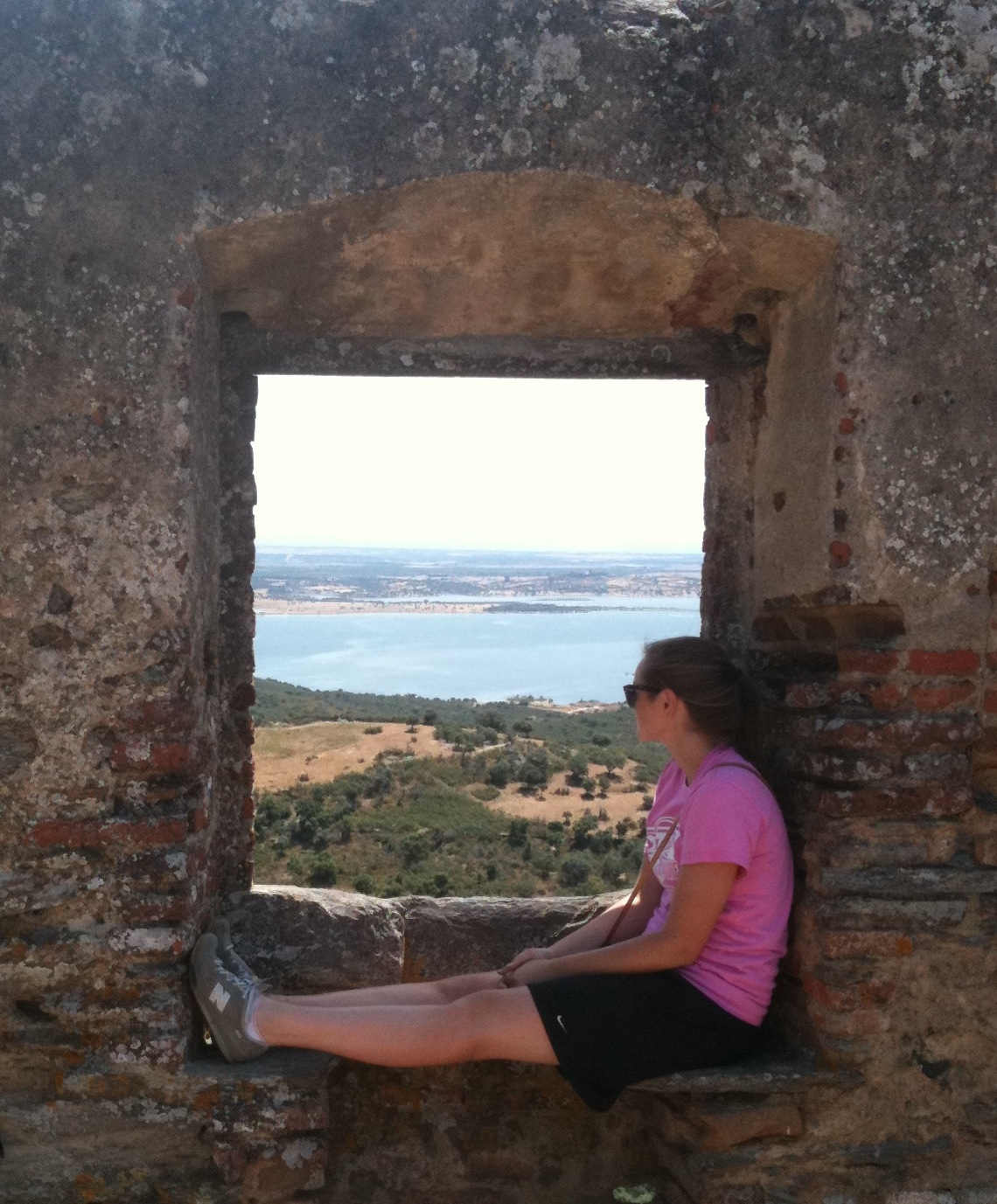 Monsaraz represents my gratitude to have spent cherished hours with Mack in a few exotic locales. Perhaps the Portuguese sun on whitewashed medieval walls offers the enchanting environment in which I wish her beautiful spirit to roam. Perhaps I want my Mack to be a part of the haunting history of that spectacular, historical place. Perhaps I want her to gaze forever through those ancient windows, watching the past, existing in the present, and waiting for the future.





 Being Mack's Momma Bear