Peace in War (or Ode to My Anger)

“Slow down” are the words I wrote in the front of my 2025 engagement calendar.

It was warm in October when I wrote those two aspirational words, after two years of writing and rewriting a book of history and my heart. Slow down, body and breath and mind. Yes, ssslllooowww dddooowwwnnn. Slow down, you tired old writing woman with stacks of novels waiting for you.

Slow down sounded so goddamned good.

Before the election.

Before November 6th when I woke before dawn in a panic.

Not good at all, slow down. Slow down? Never. Not now with a madman occupying Abraham Lincoln’s office.

There is no slow speed speed for a liberal political junkie when the people on the good side of good and evil are out of power and evil is destroying our government.

No down time, no do-nothing time. Not so many novels now that there is more political reading and doing and calling representatives and screaming. Not much chance of slowing down for this historian of American stories when America is in jeopardy and history is in crisis.

What now? What then, what words? What word? What theme for this new era of Nero? What aspiration when America burns and Republicans fiddle?

There may be no political peace this year or next year or, goddess help us, maybe never.

But personal peace is what I will need now more than ever.

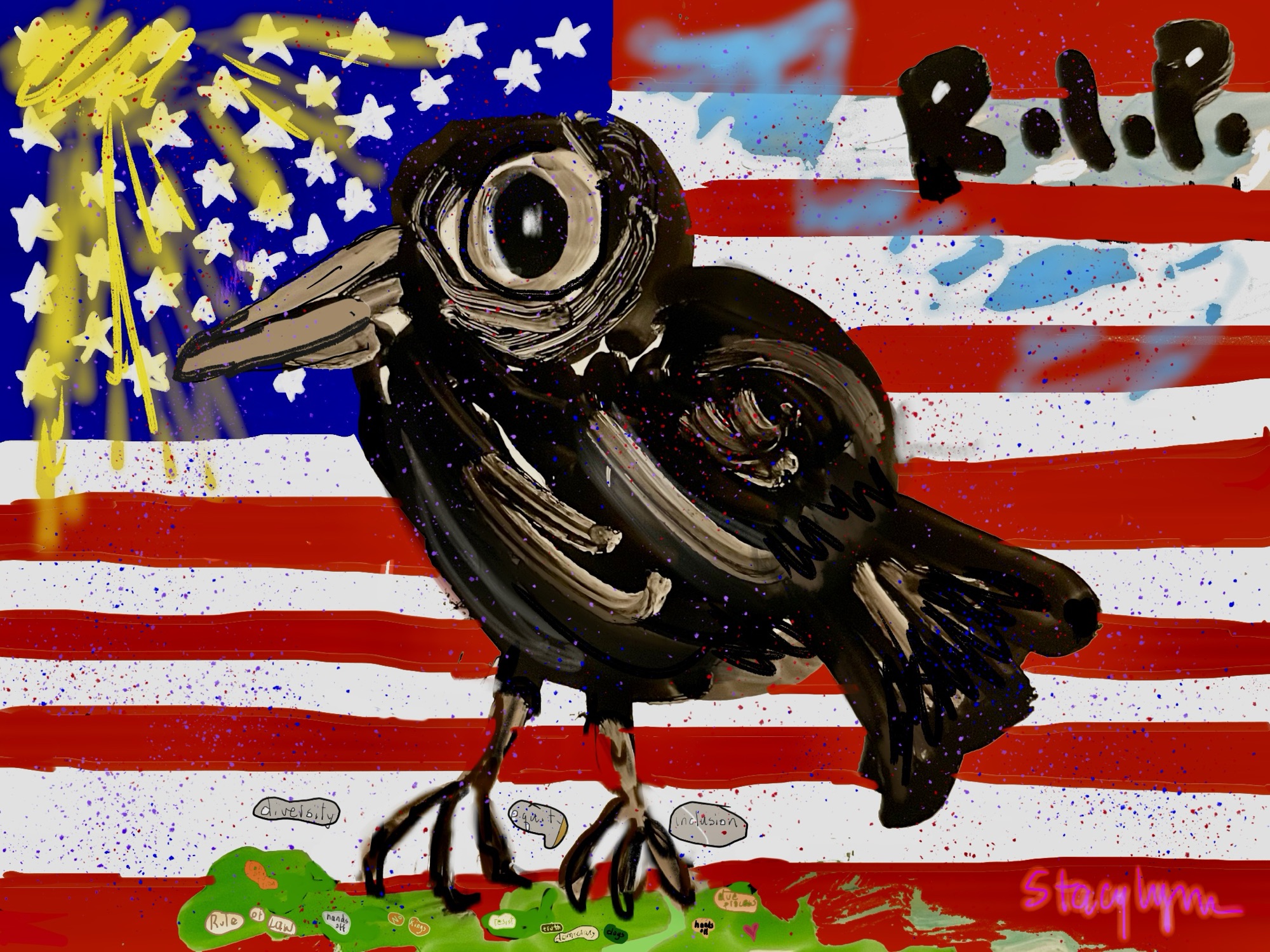
Peace is my new word. Peace. Among family. Peace. In communion with friends and dogs, birds and soon with flowers. Peace. Of community. Peace. Inner peace. Peace. Peace. Just give me a little goddamned peace.

Peace of mind and peace of home will fortify my body for battle.

Peace is the word I rewrote in the front of my 2025 engagement calendar.

It was cold in January when I wrote that aspirational word, a new want, a better offering, after just one week of the political hellscape, America’s fading landscape, fear pressing its awful shadows against my body and breath and mind. Yes, peace. Pretty please, peace. You must seek peace wherever you can find it, you tired old warrior woman, because this is war and your country needs you.

Mary McDowell and Jane Addams weren’t fucking around in 1915, and neither am I in 2025.

Life on the Anxious Seat

Opening apologies: what started out as a short blog post about one day in my life has become a short treatise on anxiety. Heaven help the grossly pensive woman alone during a winter weekend.

Oxford English Dictionary

Anxiety [noun, early 16th century; Latin anxietas] 1 The quality or state of being anxious; uneasiness, concern; a cause of this. 2 Med. A condition of distress accompanied by precordial tightness or discomfort. 3 Earnest or solicitous desire for a thing, to do something. 4 Psychiatry. A morbid state of excessive; or unrealistic uneasiness or dread.

Anxious [adjective,early 17th century; Latin anxius] choke, oppress: see ANGUISH 1 Troubled in mind about some uncertain event; concerned, solicitous; being in disturbing suspense. 2 Distressing, worrying; fraught with trouble. 3 Full of desire and endeavour; eager for a thing, to do something.

Anguish[noun, Middle English; Latin angustia] straits, distress, narrow, tight; squeeze, strangle: see ANGER n., ANGINA. Severe bodily or mental pain, intense suffering.  [verb] to distress. 1 Distress with severe bodily or mental pain. Now chiefly as ANGUISHED [Middle English]. 2 [intransitive verb] Suffer severe bodily or mental pain.

A Dictionary of American English

On the anxious seat, in a state of uneasiness; troubled. 1839 Knickerbacker [N.Y.]. XII. 345. He did look as if he had been on “the anxious seat,” as he used to say, when things puzzled him. 1862 Stowe Pear Orr’s Island II. i. What a life you did lead me in them days! I think you kep’ me on the anxious seats a pretty middlin’ spell. 1865 Atlantic Mo. XV. 454 Almira … had long been upon the anxious seat. 1887 Francis, Saddle & Moccasin 226 Oh, the boys kept him on the “anxious seat” for two or three days, and that cured him [of card-playing]. 1894 Congressional Record Feb. 2382/1, I am glad to see so many gentlemen on the “anxious seat.” 1906 N.Y. Evening Post 4 Jan. 4. All the men present were on the anxious seat, seeking to learn whether their new judge was ‘easy’ or ‘tough.”

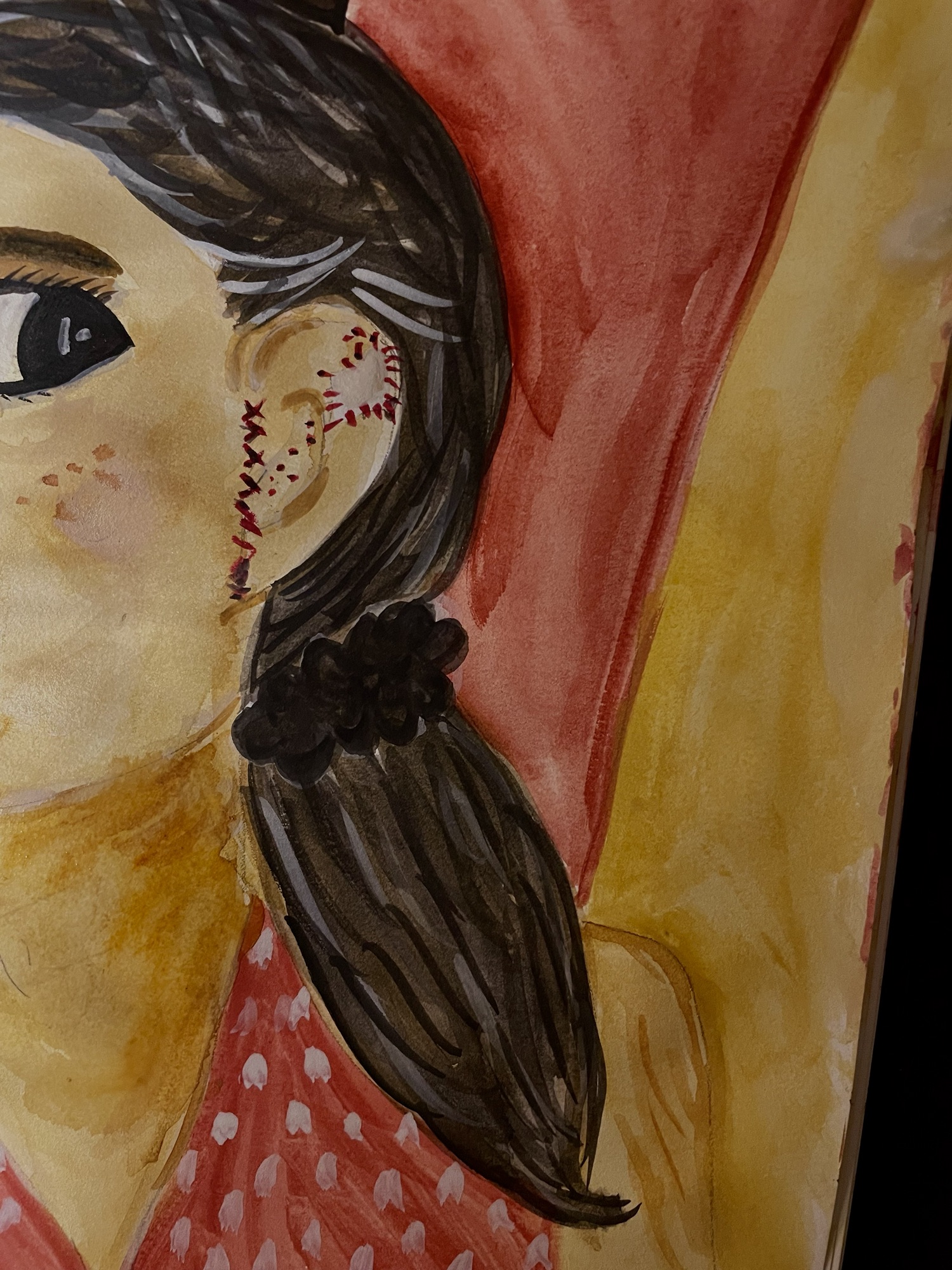
I woke up that morning in a state of uneasiness. By 10:00 a.m. I was in distress. By noon I could no longer sit still at my desk. My heart was pounding so hard in my throat that I feared I would choke on it or that it would burst right through the small hollow of my neck. My pectoral muscles were jammed up against my collar bone, and I could hear the whoosh of blood in my ears. The sound tingled and tapped on the skin of my reconstructed left ear where it attaches to my face.

I stood up and began my coping ritual of pacing and ringing my hands and clutching at my chest. My entire body was being squeezed in a menacing invisible vise. Heart attack crossed my mind at the exact moment I made eye contact with the sweet, heart-melting face of my chihuahua. Bug can almost always calm me, but this was not a troubled mind out of control. This feeling was not unrealistic dread, it was a response to my body in serious trouble.

My sister was out of town, so I texted a neighbor. She took my blood pressure. Twice. Very high, she said. I had no idea what the numbers meant but I could feel the surging of blood in every vein. I could hear my heart screaming.

Anxiety Is Real began as a failed watercolor painting and ended as a moderately successful digital drawing. A metaphor for my life as a work in progress!

Prompt care. EKG. Nitroglycerin tablet under my tongue. A Xanax. Blood pressure almost immediately easing. My sister arrives, which calms me further. The doctor comes back in, her face is concerned which is concerning to me while I wonder why I no longer think I am having a heart attack as her hand presses down on my own, telling me she’s called an ambulance. EMT’s hook me up to wires and the ambulance delivers me five minutes later to the hospital ER, where a beautiful male nurse whispers that I am in good hands. I say this is all ridiculous. I am fine. I must be, right? Or is that the Xanax talking? Another EKG. Chest x-ray. Blood draw. Blood pressure cuff on a fifteen-minute cycle, a monitor of my vital signs quietly beeping. My sister tries to sneak a photo of the beautiful male nurse. We laugh. I am calm. My heart is not pressing against the small hollow of my neck. It is resting in my chest where it belongs. I am not going to die today, even as all the wires attached to my body are no picture of good health. The attending physician enters the room.

Your heart looks good. No evidence of a heart attack. I think you’ve experienced a rather severe panic attack. Has something happened? Are you under a lot of stress or worried about something in particular?

It was November 15.

Ten days after the election.

Yes. The fucking election.

I said it out loud. And no one in the room contradicted me.

**********

The first time I remember experiencing a condition of distress accompanied by precordial tightness or discomfort I am six. A first grader on the school bus, I am silent and watchful, a nervous observer of the noisy chatter and laughter all around me. But there is a little boy crying, and I think, why is he crying? Should I be crying? Should all of us be crying? I notice that my heart is beating hard against my throat and my arms feel impossible heavy.

I think in part because I was a worried child, I became a determined and cerebral child, a self-disciplined and serious child, a skeptic always asking questions, collecting information, believing or hoping or begging that knowing would give me power to quiet my worries. I was a mother hen to my friends, always counting them and watching for loose gravel when we rode our bikes in the subdivision. My dad called me a nervous nelly and a worrywart. My mom often told me to calm down before I worried myself to death. My grandmother once said that if I didn’t stop it and breathe, I’d give myself a damned heart attack.

I became an adult believing I was responsible for my dread, that it was incumbent upon me to swallow it. There is no blame in this statement, because although anxiety was a recognized ailment in clinical psychiatric terms in the 1970s and 1980s when I grew up, such mental and emotional struggles were not everyday topics for discussion. As a kid, I had no way to define or understand the anxiety I frequently felt and, in fact, my privileged, middle-class childhood with luxuries like my own room, competitive gymnastics, and summer vacations to Disneyworld, made me believe I had no good reason to worry.

Lincoln biographers have written that Lincoln’s greatness was fueled by his melancholy. I am on the fence with regard to this historical interpretation while at the same time harboring a personal belief that my anxieties, at least a little, fueled some of the qualities that made me a relatively successful and accomplished human being. As I lived my first thirty years as an adult on the anxious seat, and accepting that perch, I developed healthy (and less healthy) copy strategies. My anxiety manifested itself in detailed organizational tactics, long-term planning, thoughtful assessments of life choices, close surveillance of my daughters, the creation of sophisticated spreadsheets and complex to-do lists, and self-disciplined goal setting. My husband saw me as a control freak, and he wasn’t wrong. I was trying desperately to control what I believed I could control and sometimes to freak level and with freaking-out ferocity. Control freak was another negative moniker, like nervous nelly, that I accepted with my desperate efforts to ease the dread I felt in my body about all of the bad things that could happen to me and my loved ones.

Control never fully soothed my unease, however, and, in fact, it sometimes exacerbated it. I still worried about death, the safety of my kids when they were away from me, family members and friends driving on freeways with semis. I fretted about tornadoes and wild animals outside in the snow and the kids that didn’t make the basketball team and melting polar ice.

Even the healthy strategies I developed only masked the anxiety. I didn’t know it then, but I was trying to hide the pathology of my distress instead of facing it head on and eyes wide open. All of the self-control I mastered within my life and all the pushing aside of all my distress and worry with excessive doing could not protect me from my greatest dread. And when my darling Mackenzie died and life as I knew it unraveled, forty-eight years of living had taught me nothing about how to survive the anxiety her death and my unbearable grief wrought upon my body, my mind, and my spirit.

That all seems like a lifetime ago now. I am not that woman anymore. I am altered, and my life is fundamentally different. My struggle with anxiety, however, did not die with that woman standing in the ruins of her life. As I had to collect new strengths to survive grief, so too I had to reevaluate my relationship with anxiety. And so, in the end, even the anxiety embedded in my DNA has, in many ways, shifted.

For five years now, I’ve been in therapy, wrestling with my worries and gaining acceptance and knowledge about how my brain is wired. A daily practice of yoga and meditation is teaching me that even a person like me who so easily leans into a morbid state of excessive and unrealistic dread, has the power to find inner peace. Simply having the words to define my unease and to better understand it has been a sweet release. I no longer blame myself for feeling anxiety. I no longer call myself a nervous nelly. In basic terms, my struggles with anxiety are no different than my struggle with seasonal allergies. While it is my responsibility to be as mentally and emotionally healthy as possible, I no longer blame myself when all of my best strategies fail me.

Whereas a good spreadsheet will always help me quell a particular financial worry, an orderly house inspires my calm and creativity, and a fastidiously kept calendar gives me confidence in my abilities to navigate the chaos of modern life, sometimes the outside world gets in, dammit, and I am, ultimately, only human. Anxiety is not who I am, but I am a person who experiences a level of anxiety that can make me unwell. To live with it gracefully will always be a work in progress.

The trip to the ER in November was not at all graceful. It was terrifying and humbling and life reaffirming. (And that short ambulance ride was all kinds of expensive). But the caring health professionals who saw me through that panic attack and my wonderful therapist have helped me see that medication can be a useful tool and that given my proclivity to sit in an anxious seat, my trauma and grief, and the very real political and planetary uncertainties, I am doing okay. In the two weeks since the inauguration, I have experienced several days of heightened anxiety, particularly stressing the threat that changing federal policy poses to my livelihood and my life’s work.

In last week’s therapy session, I expressed a feeling of guilt not only about all the health care consumed for a panic attack but also for having the luxury of all this naval gazing when so many less fortunate people are in real jeopardy. A holdover from my childhood that my life is too lucky to feel debilitating dread. My therapist reminded me that the anxiety I feel is as real as a heart attack and that I can help no one if I am unwell. She also urged me to consider the idea that my anxiety over the election and all of the chaos and uncertainty since the inauguration is exacerbated by my empathy and heightened concern as a historian for the wellbeing of my country.

She is not wrong to refocus me in this manner. There are real worries in the world AND I am a person wired to worry and vulnerable to unrealistic dread. Thus, my unfortunate trip to the emergency room. It is much easier for me to feel the pain of empathy, however, than to breathe through anxiety, even as I must admit that I worry so much in part because I care so much. Still, empathy was never my problem. Empathy did not cause my panic attack in November, and it is not the reason I have been sitting on the anxious seat these past two weeks. The reason I am anxious is because my messy beautiful imperfect brain is misfiring. Knowing this doesn’t make my brain better, but it makes me feel better, if that makes any sense at all.

It is absolutely true that all of the processing of anxiety I have done over the past five years has been worth the effort, even as I could see that it failed me in November. I understand myself better than I did five years ago. I am more accepting of my human imperfections, and I honor every experience. From the stresses of writing a new book to the worry I am feeling about promoting the book beginning this summer and from the dread that sometimes creeps in late in the night to a troubled mind that makes me spin out the worst political and historical consequences of a disastrous election, as distressing and uncomfortable it all might be, it only becomes debilitating anxiety in the manufactured mess of my dear old brain.

Anxiety. Anguish. On the anxious seat. All of it is me and it isn’t all of me. When anxiety rises in my body, it is real and it is emotionally and physically painful. It is not a figment of my imagination. It is my struggle, part of my story, a colorful descriptive inset on the perfectly ordinary crazy map of my life. And the only difference between me and so many other people I know who experience anxiety (it is a common struggle in our society) is that I find solace and affirmation in writing about it. I have a lot of fears, trust me, but sharing my truth is not one of them. I share because it gets the sharp edges of hard experience out of my body and there is always the chance that I will reach someone out there in the world who thinks she is all alone. Okay, so that can be my excuse for this anxiety treatise. These are anxious times, and I believe a lot of us are feeling anxious.

I wonder. If all the people sitting on an anxious seat all alone decided to sit together on one giant anxious seat, we might just have evolutionary power to rewire the future. 

My Best Year of Reading

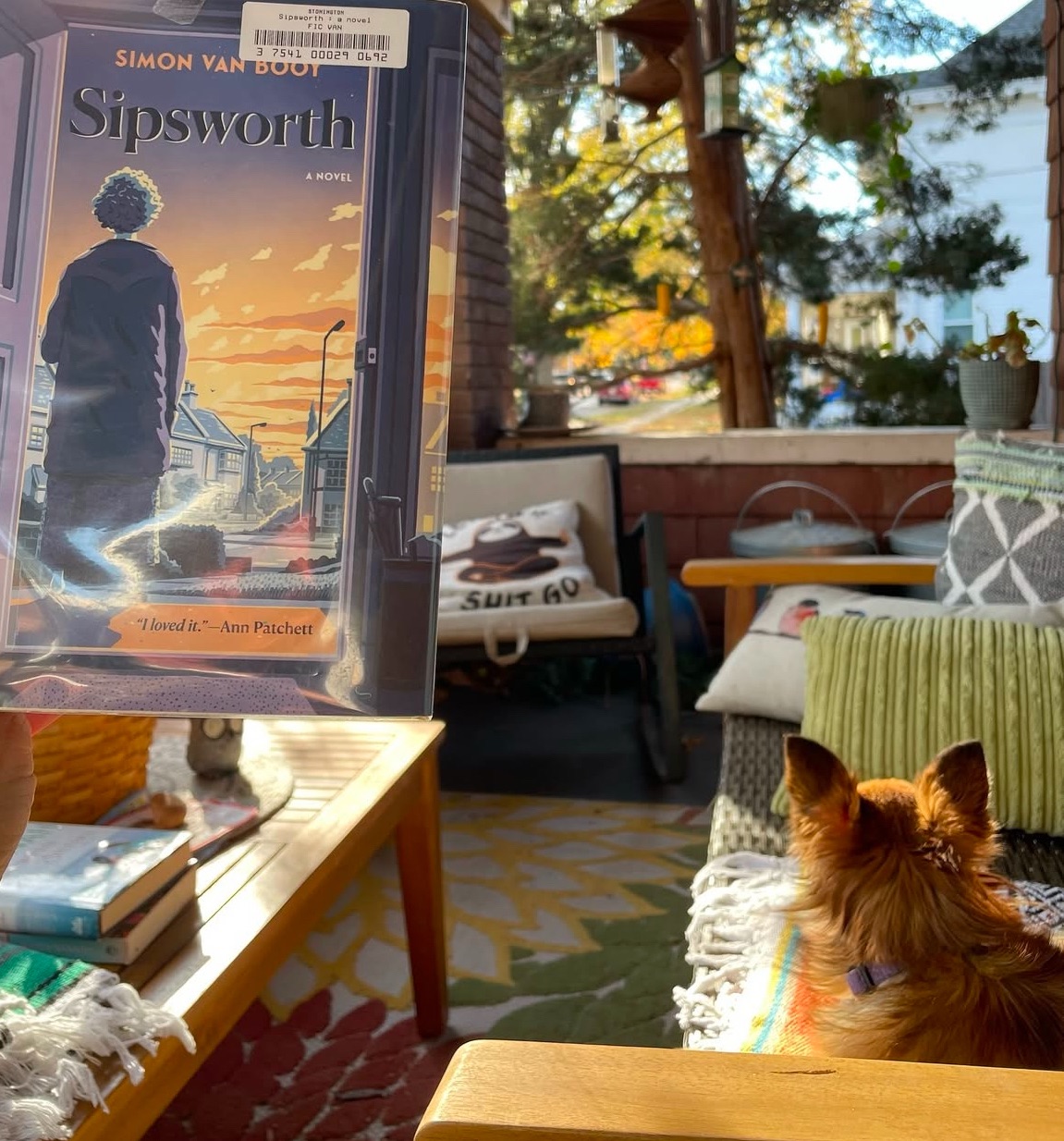
My Favorite Book of the Year (and favorite Instagram book review pic): Sipsworth by Simon Von Booy

As I finished reading my final book of the year in late December, I realized my year of reading in 2024 had been different. Brighter. Better. My very best year of reading, ever, in fact. Not because I read more books (I didn’t). Not because I read more wonderful books than usual, either (last year was more jam-packed with the exceptional). It was my best year of reading because I was present for every page of it. Even during the difficult moments, my reading was deliberate as well as joyful, all for love of good writing, learning, and a compelling story. I did not read to escape fully from this life or to blur the lines of my personal struggle.

I read to be present, much as I do yoga to be present.

All my life, except for four years during my fog of grief when I could not read at all, reading has been a joy, fed my curiosity, or helped me to escape my troubles.

In 2024, reading was a joy and fed my curiosity, but it helped me to balance my troubles with all the good in my life. Each book was what I wanted or needed it to be at any given moment, because I read it wide awake and open. I never read to pull the covers over my head. Reading was not a remedy. It was not merely a joy. It was a life force. Much like the breath in yoga. In and out, intentional and nurturing.

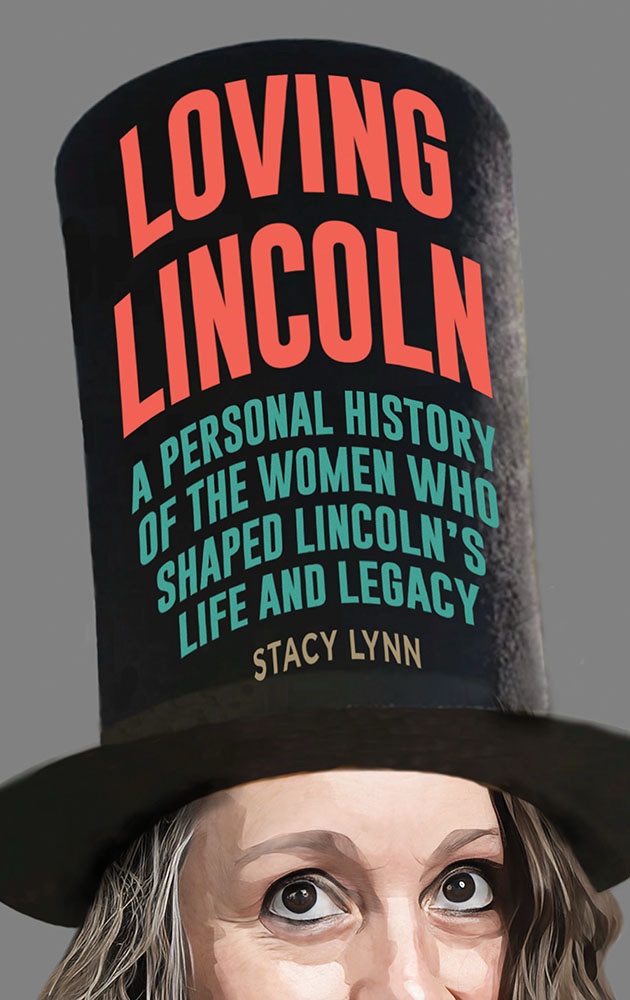
In the spring during my skin cancer diagnosis, Mohs surgery, plastic surgery to rebuild my ear, and the six long weeks of rest when I couldn’t walk briskly or get on my yoga mat, I was able to read. Yet my reading did not simply take me away from pain and worry, it engaged my senses and poked and prodded my emotions and intellect. The night after a panic attack that sent me to the emergency room in mid-November, I was able to read, but reading didn’t let me off the hook. Rather it helped me hold the doubt and find the sweet divine of stories other than my own. Throughout the hectic, year-long post-writing work on my forthcoming book Loving Lincoln, my pleasure reading was not just an escape from stress; and audio books were not just a rest for weary eyes. Reading or listening to a book was an energetic, purposeful pledge to be awake, the same euphoric release of a brisk walk, an hour’s work at my watercolor painting, or a lively discussion with a smart friend.

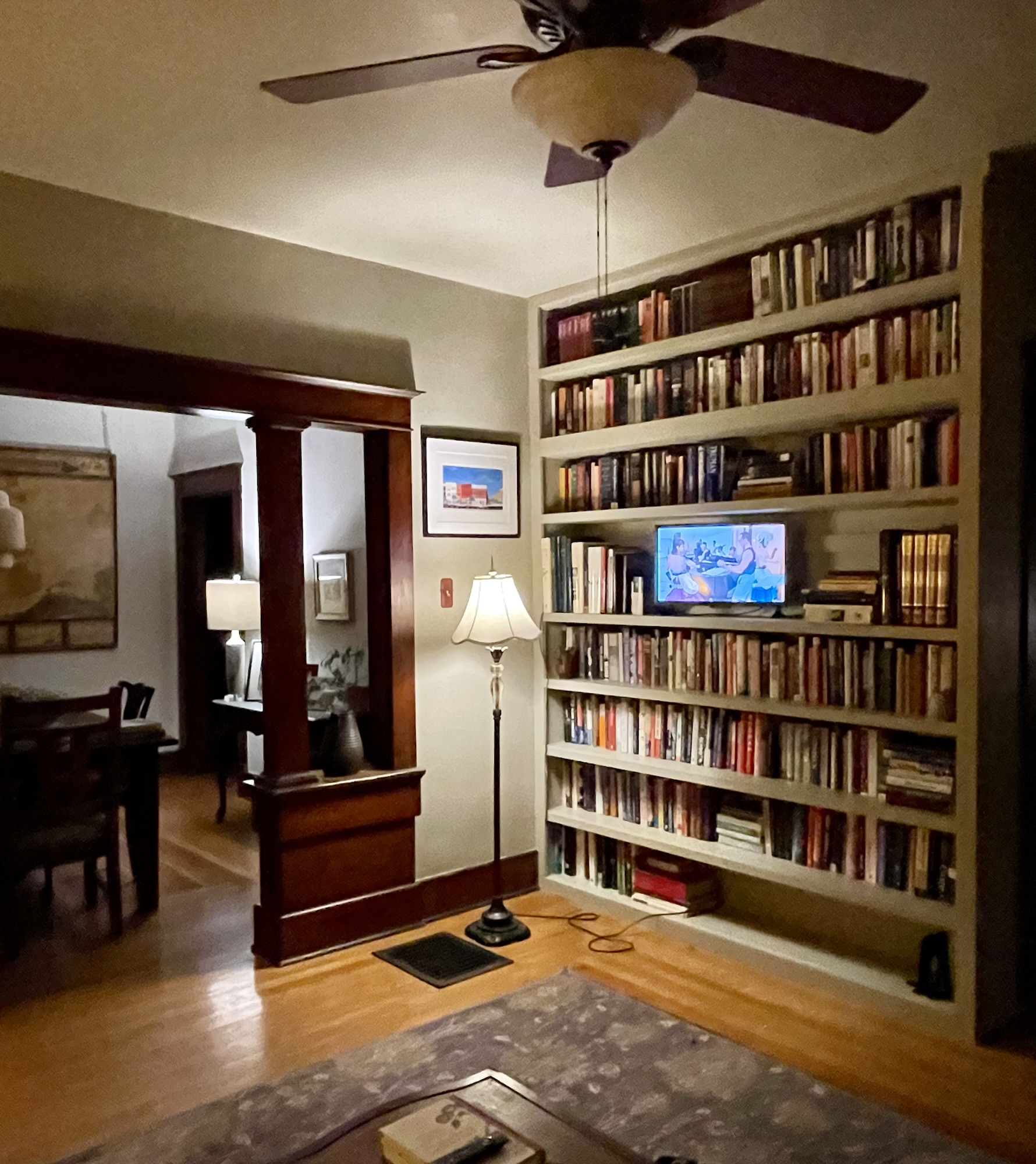
And maybe my beautiful new bookcase is the perfect evidence of this best year of reading.

Books are my favorite possessions. Reading is not just a hobby, it is my happiest time spent in quiet, beautiful existence.

But lets get to the books, shall we? Among the list of 52 are three of the best books I’ve ever read in my life and a couple of duds. There are novels and memoirs and nonfiction books that speak to our country’s and our planet’s precarious conditions. There is a 624-page book and a novella, an artful book about birds, and a book about men at sea I never in a million years would have guessed I would love. As I stand back and peruse the list, I am not surprised at how fast the fast-clip pace of a book a week passed by, and I stand in awe of some crazy good writing by authors I’ve long admired and others that took me far too long to discover.

The top three books were, by far, my favorites, but the rankings of the others are less precise as it is hard to compare books that are important with those with beautiful prose. The reviews are taken directly from my Instagram reviews, unedited for this blog, even as I admit my opinion might have hardened or softened since reading the books and posting my reviews.

Cheers to all my 2024 books, one and all. You made me laugh and cry, ponder and worry and scream.

Sipsworth by Simon Von Booy (2024) ❤️❤️❤️❤️❤️

On a Friday, Helen is a lonely, cranky 83-year-old woman who has returned to her childhood town in England to finish living. On a Sunday, nine days later, she has adopted a mouse, turned vegetarian, broken the law, gotten a library card, and is entertaining a sitting room full of new friends.

This lovely little novel, with a surprising reveal in the middle, exudes the full range of human (and mouse) emotions from beginning to end. So charming and bittersweet, this beautiful story of a life is a quiet squeak that would warm even the chilliest heart.

North Woods by Daniel Mason (2023) ❤️❤️❤️❤️❤️

I gasped out loud at the end of this astonishing novel and then I sobbed at the beauty of it. North Woods is a creative whirlwind of stories across time, an epic history of place, and the haunting memories of lifetimes. A yellow house, humble and grand and humble again, is the setting for every tale, told in prose, poetry, letters, and even a real estate advertisement. From the discovery of a glorious variety of apple to the jealousies between spinster sisters to the forbidden love of a landscape painter for a poet, the stories of the North Woods unfold slowly like breath after breath after breath but they echo through the pages and build, together, to a breathtaking crescendo. The forest and the fields, catamounts, weather, and mental illness are central characters equal to the soldier-turned-orchardist who begins the novel, the young botanist who closes it, and all the peopling in between. The human emotions of love and loss and loyalty are foundational themes, but North Woods is so much more than a story of humanity. It is chronicle of the world, whispered from a remote piece of the earth in western Massachusetts.

Here After by Amy Lin (2024) ❤️❤️❤️❤️❤️

This gut-wrenching memoir has no purposeful narrative. No chronology. No story in time, with a beginning and an ending. Because grief has no purposeful narrative. No chronology. No story in time, with a beginning and an ending. This memoir, like grief, is a pulsating but horrifyingly quiet collection of thoughts, revealing the shock and pain of grief settling in for its permanent residency in the body. I’ve probably read 100 memoirs of grief since my daughter died. Too many words and so many books failing to capture the terrible, damaging rhythm of grief. In hardly any words at all, Here After captures the random, jolting, awful pace of memories that beat the grieving almost to death but also somehow miraculously lead us, at our own pace, back into the light.

Same As It Ever Was by Claire Lombardo (2024) ❤️❤️❤️❤️

Julia Ames is a character I will not soon forget. Not because she is a heroine or heroic or extraordinary. Not because she is exactly my age and, like me, still so uncertain about who she is and where she belongs. I won’t forget her because Claire Lombardo has drawn her with such detail and emotional depth that reading this book is like seeing the raw pain in real time of the mistakes and misjudgments of a friend you’ve known for twenty years. Almost like you are her friend, standing beside her as she learns to allow herself a little fucking grace, because don’t we all deserve a little fucking grace?

When a character in a novel becomes such a friend, you’ll read any number of pages, even a number you thought on page one was arrogant for such a young novelist, but then all of sudden you’ve read 250 pages and are so happy there are 250 more. It will never be arrogant to write such beautiful sentences, to so tenderly examine a psyche, to construct such a genuine life between the covers of a book so heavy you have to rest it on a pillow in order to keep reading for hours. The emotional power of this novel is stunning, the story is remarkably relatable, and the writing, even the long paragraphs, are crisp and delicious. And oh my goodness, those last lilting, mournful, joyful seven pages are a crescendo of all the love and the pain, the frailty and the beauty, and the simple, noisy melody of a life.

Tell Me Everything by Elizabeth Strout (2024) ❤️❤️❤️❤️❤️

Tell Me Everything is a perfect novel. Memorable, beloved characters. Heartbreaking and heartwarming stories about flawed humans. Beautiful writing. This book is also brimming with wisdom, friendship, and the little things that matter in the stories of our lives.

Tip: Read the Lucy Barton books, the Olive Kitteridge books, and the Burgess Boys first. This is a stand-alone novel, but the coming together of characters will be so much richer if you do.

Anything Is Possible by Elizabeth Strout (2017) ❤️❤️❤️❤️

Sometimes you read a book or a new author for the first time, and you’re not ready. Not ready for the characters or the story or the tone. Your mind is closed off from the beauty of the book or the author’s unique prose. In the early days of my grief I read My Name Is Lucy Barton. I hated Lucy. I hated Elizabeth Strout. I was mad at the world. I wasn’t ready. When I emerged from the fog of grief, I knew I had read books that I judged in sorrow, not in wide-eyed, open-hearted joy. So I gave Lucy and Elizabeth a second chance, and now I know the beauty of them both. Now I adore Lucy, Olive, William, and the fictional town of Amgash, Illinois, and I am in awe of Elizabeth Strout. She is now one of my favorite authors. Anything Is Possible is a love letter to being human. It is an ode to being frail and brave, lost and found, alive and also barely breathing. And there is Lucy, again, too. This beautiful novel is perfect timing for me as I anxiously await Strout’s new novel coming in September.

The Comfort of Crows by Margaret Renkl (2023) ❤️❤️❤️❤️

Renkl’s essays rock you like a creaky old porch swing on a summer night, the cicadas humming. Like everyone who loves nature, she worries about the future of our warming planet, but she gives herself and all of us permission to find the joy of shorter winters and early green leaves on invasive trees. The Comfort of Crows has love and snails, beauty in the face of uncertainty, hummingbirds, little animal hands, and the magic of leaf litter. And, wow, the gorgeous epigraphs offer up a fantastic, aspirational reading list. Better than a beach read, add this love letter to nature to your summer reading.

This Other Eden by Paul Harding (2023) ❤️❤️❤️❤️

This Other Eden is a lovely, softly written story of the evils people in power inflict upon the other. But it is also and more importantly the story of the stories of lives forged out of nothing, dignity and love breathed out of tragedy, and what is lost in the living, like a known landscape after a devastating storm. A fictionalized account of the horrific removal of a people, this book is more evidence to me that sometimes history is so painful it must be whispered into being and into memory on the pages of a beautiful novel.

The Cemetery of Untold Stories by Julia Alvarez (2024) ❤️❤️❤️❤️

Alvarez has written a poetic, imaginative, and deeply compelling novel about the stories we tell, the stories we keep to ourselves, the stories that haunt us, and the stories that set us free. She also poses the question: do stories need a teller and a listener, or can they keep themselves? I do not know, but I adore her idea of stories in communion with each other. In gorgeous prose, slipping occasionally, melodically into Spanish, the novel reinforces my belief that stories are everything, and in life and in death, they are the world.

The last line of the novel reads: “este cuenro se ha acabado.” But is any story really ever over? After reading this novel, packed with myriad stories and their fascinating, individual lives, I rather think not.

Small Things Like These by Claire Keegan (2021) ❤️❤️❤️❤️

Wow. This novella is gorgeous, both the writing and the tale exquisite. The story of a simple man’s enlightenment, it quietly illustrates how being blind to the injustices around you makes you complicit; and how it is impossible to look away once you have opened your eyes. Claire Keegan is an Irish writer well known for her short stories. I have to admit I had never heard of her until someone recommended this book, for which I am grateful.

The Mermaid Chair by Sue Monk Kidd (2005) ❤️❤️❤️❤️

I’m not sure how I waited so long to read this second of Kidd’s four novels, especially after devouring her most recent and best novel, the masterpiece Book of Longings (2020). I love Kidd’s writing. She is a queen of story and landscape and melody, and in this soulful novel she artfully reveals the deep center of a woman’s psyche, ripping her life and the world wide open with beauty and grace. This novel is the journey through a long year in a woman’s life, when she falls in love with a Benedictine monk and makes “a brilliant wreckage.” It is a story of family secrets, the fierce friendships of women, memory, and the quiet ways women lose themselves in domestic complacency. The book is bursting with beautiful writing. There is art. There is food. There is island culture. There are eccentric characters. And there are mermaids.

The Great Divide by Cristina Henríquez (2024) ❤️❤️❤️❤️

The construction of the Panama Canal is the setting for this crisp novel about people’s fierce sense place, the joy and power of unexpected friendship, and knowing when it is time to stand up and say out loud that you are here. In this lovely tale, the characters across the great divide help each other gather hope and love and to acknowledge the roots that nourish us in the face of revolutionary change.

Sandwich by Catherine Newman (2024) ❤️❤️❤️❤️

Sandwich is a novel about the middle—a woman in middle age with grown kids and aging parents, a human being living in between love and grief, the latter we all must do if we are lucky enough to truly live. Fear of grief is not quite the same as grief I wanted to tell Rocky, Newman’s protagonist; but I also wanted to assure her that she is absolutely right that the true bliss of loving is knowing that your heart might crack wide open at any moment. Sandwich is a witty and profound little book about life, and Rocky is a beautiful, bittersweet middle-aged woman I recognize.

As she reminds herself at the end of the story: “So you might as well love as much as you can. And as recklessly. Like it’s your last resort, because it is.” Life is like two slices of hearty bread, and it’s up to us to load it up with all the good stuff we can get our hands on.

Weyward by Emilia Hart (2023) ❤️❤️❤️❤️

In the pages of this debut novel are the distinctive and strong voices of three Weyward women across time. Hart’s prose is lovely, her pace is summertime time, and her historical tone is pitch perfect—impressive given the three historical settings, England in 1619, 1942, and 2019. I loved the mystical quality of the novel, the way the author connected the stories of the three women, and the crows. Oh, if only women really did possess the power to consort with crows and command nature to watch over them and exact delicious revenge on the men who harm them.

If you liked The Lost Apothecary, you’ll love Weyward.

Piglet by Lottie Hazell (2024) ❤️❤️❤️❤️

!!SPOILER ALERT!!

As her mother, sister, and father work to stuff her large body into the wedding dress, the wedding photographer witness to the horror, the last of Piglet’s self respect melts away like the profiteroles for the croquembouche leaking crème patisserie on the kitchen floor. It’s hard to watch this undoing of the poor protagonist so late in the story, when she’s had too many opportunities already to extricate herself from her doomed relationship. Food, relationships with food, self loathing, and betrayal boil over and stew across the pages of this odd little novel about a grown, professional woman who allows herself to be called Piglet. And like the pasta with tomatoes and olives and capers that she expertly prepares and eats on the final pages, the novel is satisfying and delicious.

The Heaven and Earth Grocery Store by James McBride (2023) ❤️❤️❤️❤️

!! SPOILER ALERT !!

In The Heaven and Earth Grocery Store, there is love and friendship, loyalty and bigotry, life and death and shelves and shelves of nourishment. This is a novel of the interconnected stories of a community both of and apart from the history of America. Beautiful writing and lovely, complicated souls await the reader on almost every page. Only four stars because I think the storyline falters a bit when we must say goodbye to that glorious and giving grocer at the novel’s heart, but this is a special kind of book that lovers of stories simply cannot miss reading.

Eve by Cat Bohannon (2023) ❤️❤️❤️❤️

Eve is a must read for anyone who cares about women and humanity. It should be required reading for anyone who doesn’t already know that women are queens. Full of remarkable research, fascinating observations, and stunning revelations about women’s bodies and their role in human evolution, Eve is mind blowing. Particularly interesting are discussions about the placenta; voice, gender, Bill and Hillary Clinton, and American politics; and a section at the end entitled Asteroids and Assholes that reminds the reader that the modern world is a spinning orb of uncertainty. All of us start out in a womb, people, and any society that oppresses or endangers women and girls is already on the path of its own extinction.

You Could Make This Place Beautiful by Maggie Smith (2023) ❤️❤️❤️❤️

A lovely, sad memoir of beginning a new life story. There are dozens of gorgeous sentences in this memoir, and the unusual cadence is haunting juxtaposition to the domestic story it unfolds. Seeing a little too much of my own experience in Smith’s story, especially the self-reflection, made me squirm, but wow, what a wonderful rendering of life, messy and beautiful and possible.

The Backyard Bird Chronicles by Amy Tan (2024) ❤️❤️❤️❤️

Lovely. Charming. Funny. Beautiful. And full of feathered fancy. I enjoyed this book all year, kept it on my porch all summer, and even gifted it to my mother. Tan’s drawings are fantastic! It’s not a book you read from front to back. It’s a book you randomly open to nibble and return to often, the discovery unfolding much like the birds arriving at the feeder in morning. This book is going back out on the porch in 2025 to enjoy for another year.

Fire Weather by John Vaillant (2023) ❤️❤️❤️❤️

Fire Weather is a true horror story, beautifully conceived and written. It offers a terrifying, brilliant examination of what human beings have wrought upon our planet. It is a searing indictment of the oil industry, policy makers, and politicians who ignored and then blatantly undermined climate science to feed their greed and power. Earth is on fire, and our reliance on fossil fuels has brought us to this fiery moment. Western society’s predatory delay in answering the fire alarm of climate change is responsible and to blame for the hellscape our children will inherit. In the not so distant future, as Vaillant puts it: “Lives will be cut short. Trauma will be far more common and good health harder to hold and maintain. None of this will be the fault of nature itself. It will largely be inflicted by the inaction of this generation of adults on what might fairly be described as the greatest inter-generational injustice ever inflicted by one generation of humans upon the next.”

This is a great book, but sadly, Vaillant is preaching to the choir. Only those of us who have faith in science and already appreciate the precarious position of human beings on our planet will even read this book. That’s too bad, because this is a fire and brimstone sermon that might put the fear of Jesus in some of those holding us hostage to bad energy and environmental policy, and better than any southern Baptist minister could do it. Fire Weather is not a hopeful book, but it sure as hell is an eye-opening one. Having read the book, I am hot with rage but also chilled down to my bones.

If you ever drove an SUV or consumed water from a plastic bottle, you are culpable. I am culpable. In the West, we are ALL to blame for the havoc already unfolding. Exhibit A: the Fort McMurray wildfire of 2016. And the only consolation I can find is that when we finally destroy humanity, the trees and plants that one day emerge from beneath the ashes will not know what we did.

The Wager by David Grann (2023) ❤️❤️❤️❤️

I don’t seek out adventure stories of men, historical or fictional, so I am grateful for the recommendations that led me to read The Wager. A fine piece of historical writing, this book beautifully illustrates what I love best about good history: it expertly conveys the facts we can know, spins out the conflicting evidence, and fills in the gaps with humanity. So if you are keen on naval history or the “ravaging dreams of empires” or just love a good story, I’ll bet you, too, will enjoy The Wager.

I also want to note the physical book itself is so lovely, printed on quality paper with two sets of gorgeous color illustrations and maps on the inside covers. The book has that satisfying weight and luxurious feel that many expensive but cheaply produced books these days so often lack (like last year’s Tom Lake).

Foreign Bodies by Simon Schama (2023) ❤️❤️❤️❤️

Foreign Bodies is classic Schama. Impeccably researched, exhaustive in scope, rich in detail and in context. His books are always a master class in the value of good history. I found some of the discussion of politics and the science of pandemics a wee dry (nature of the beast, I suppose), and I shuddered at some of the disease details (I would have been quite happy to have lived my entire life without reading about plague buboes). However, as usual, I am in awe of Schama’s brilliance. This book is a timely history, full of historical context about how human beings, their hatreds, their cultures, and their governments often stand in the way of public health. As stated by one of the epidemiologists Schama writes about: “It is a curious thing that the public always hates its benefactors.” And, so, Schama leaves the reader with COVID and Dr. Fauci.

To know the past not only explains the present but also debunks the false idea that humans made steady progress toward our present. Sometimes we read history and find ourselves standing in the same place as our ancestors. We might speak a foreign language from them and experience far different landscapes, but in some ways humans don’t change much over time. Perfect closing: “Contrary to what you’ll read in tabloid headlines or hear in the hoots and yells of social media, in our present historical extremity there are no foreigners, only familiars, a single precious chain of connection that we snap at our utmost peril.”

American Breakdown by Jennifer Lunden (2023) ❤️❤️❤️❤️

This book is impressive, fascinating and important. Lunden offers a deep dive into the toxic environmental, medical, political, and economic landscapes Americans inhabit. She parallels her personal search for health with that of Alice James in the 19th century, beautifully demonstrating the historical threads of women’s suffering. This human focus is also a counter balance to the complicated scientific and medical issues she tackles. American Breakdown is not an easy book to read (I never thought I would ever learn so much about chemicals), but it is a rewarding one. America is tragically unwell, and Lunden’s clear-eyed critique illustrates how the ravages of capitalism, sexism, inequality, outrageous health care costs, and the toxins to which we are daily exposed endanger our bodies, our communities, and our future. I started this book last summer, but put it down to finish my manuscript and forgot about it. I read the last 100 pages today, and wow, I’m so glad it emerged from under a stack of “to read” books so early in the New Year.

The Lost Bookshop by Evie Woods (2023) ❤️❤️❤️❤️

Martha is lost and has no idea that her future is in the past. Henry is obsessed with the past and has no idea his dreams are standing right in front of him. Opaline is the brave woman from the past who brings these two lost souls together so they can solve the mysteries of the lost bookshop. This wonderful novel has all of the glorious aspects of a cozy bookshop, even the smell almost lofts of the pages. The story is hopeful and bright, filled with magic and human kindness, and Henry is one of my favorite male characters of the year.

Our Hidden Conversations: What Americans Really Think about Race and Identity by Michele Norris (2024) ❤️❤️❤️❤️

Our Hidden Conversations is a must-read book about race and identity in America. NPR listeners will remember the author and her fascinating Race Card Project, which make up the collected conversations inside this thought-provoking volume. It is a long book on a fraught subject, but if you care about America and the problems we face as a free society with so much more room to be better, it reads like a winter prairie wind, fast and bracing. It’s a smart, open-hearted, and honest book, encouraging readers to share and to LISTEN. I chose the audio version, and I encourage you to do the same. To hear the cacophony of voices in this breathtaking book is to better facilitate the hearing that all of us need to do, especially as we face another four years of ugly othering and leaders whose intentions are to denigrate our beautiful diversity and to divide the best of us.

Poverty, by America by Michael Desmond (2023) ❤️❤️❤️❤️

In Poverty by America, Michael Desmond does not simply explain the condition and context of American poverty. He makes you think about your role in perpetuating poverty. He makes you cry, he makes you scream. He explains not only why poverty exists but examines ways to end it. It is a hopeful book in that Desmond illustrates how it is possible to end poverty in America. But it is a depressing book, too, because I know in my head and feel in my heart that there is little political will to make the sacrifices necessary to end it.

Maude Horton’s Glorious Revenge by Lizzie Pook (2023) ❤️❤️❤️

An uncomfortably delightful tale of the ghastly spectacle of public executions, murder, and revenge. Lizzie Pook takes the reader on a suspenseful ride through the underbelly of Victorian England, where a proper young woman muddies the hems of her skirt and her heart to avenge the violent death of her beloved sister. Fast, fun historical fiction in gruesome detail.

The Bookshop by Evan Friss (2024) ❤️❤️❤️

The Bookshop is a delightful history about the lineage and business of bookstores, but more importantly it is a collection stories about the quirky people who opened bookstores and the ways in which bookstores were advocates and activists, promoted authors and genres, and were members of their communities. Friss covers everything from Benjamin Franklin to the Strand in New York to Ann Patchett’s Parnassus Books in Nashville to Amazon. It’s good, interesting history and a fun read, filled with wonderful tidbits about the magic of books.

Eyeliner by Zahra Hankir (2023) ❤️❤️❤️

I have been an eyeliner devotee since I was a teen, and since I was a young scholar in a field of sexist men I have worn it as an armor. Imagine my delight happening upon this history of eyeliner in the new book cart at my local college. And imagine my validation when I learned that eyeliner in many cultures has been an armor. It was an interesting little book, and the line drawings of people in eyeliner at the start of each chapter are lovely.

The Grey Wolf by Louise Penny (2024) ❤️❤️❤️

The latest case of Chief Inspector Gamache of the Sǔreté is big stakes, the story dark. Sadly, though, it’s kind of boring. I mean, I liked it, of course, because it’s Gamache and brioche and the ambiance of Quebec, with brief appearances of the delightfully quirky residents of Three Pines. But this nineteenth installment of the series was not my fave. So now I’m even more ready for book twenty (does that even make sense?)!

The Twilight Garden by Sara Nisha Adams (2024) ❤️❤️❤️

Not as strong of a narrative as her first book, but this sweet tale of friendship and the communal spirit of a garden is an enjoyable read. I appreciate novels that evoke a strong sense of place, and The Twilight Garden is about as good as it gets on that point. It’s a sleepy story, but the characters, a family of foxes, and a young man finally coming to terms with his grief are worthy of the lullaby.

Amy and Isabelle by Elizabeth Strout (1998) ❤️❤️❤️

Sometimes it takes a dead body to see we’ve been doing it all wrong. We are only human, after all. Strout’s first novel, this story is about a mother and a daughter and the ways in which mothers and daughters and humans fail each other and love each other imperfectly. Tender as well as harsh, and beautifully written.

Bronze Drum by Phong Nguyen (2022) ❤️❤️❤️

Bronze Drum is historical fiction based on the life stories of two warrior sisters who rose up against the brutal oppression of the Han Chinese. Woah, damn. What I didn’t know about the ancient history of Vietnam is a lot, and a lot of it is quite terrible. The Tru’ng sisters are badass feminists and patriots even as the odds against them are unfathomable. A good human story, but a depressing one. The cruelties that men in power have wrought upon women throughout history is heartbreaking and horrific. But every once in a while brave women stand up and refuse to comply, which is beautiful and inspiring. Pretty good writing here, too, giving the reader I haunting sense of ancient Vietnam in 40 CE.

The Hypnotist’s Love Story by Liane Moriarty (2023) ❤️❤️❤️

!!Spoiler Alert!!

Not always great literature, but Liane Moriarty’s books are always great fun. The women she writes are original. Better than quirky. Human and weird and relatable. The plot of this one is hilarious. The protagonist is a hypnotherapist. Her clients are a hot mess. And her finance’s stalker is a woman who bakes cookies in her victim’s kitchen. It is a little down under dark, but the cookies are not poisoned and the stalker snaps out of it in the end.

Master Slave Husband Wife by Ilyon Woo (2023) ❤️❤️❤️

If you don’t know the phenomenal story of Ellen and William Craft and their bold and brilliant escape from slavery to freedom, read this book. If you know the story already, move on. I understand why this book was well received, because the history it tells is mind blowing and not widely known. But if you know the story already, it reads a little dull. That’s not a fair knock on the book, just a bummer for this one opinionated historian.

Yellowface by R. F. Kuang (2023) ❤️❤️❤️

Fascinating tale of book publishing, lies, racism, and cultural appropriation, but not enjoyable. No, too dark and cringy for me—and yes, I know it’s satire. Kuang is a great writer, though. She’s imaginative and wholly original.

Ruthless River by Holly FitzGerald (2017) ❤️❤️❤️

Holy hell, this memoir was my worst nightmare and reminded me that the nature around my porch is all the nature I need. Good grief and mercy sakes alive. If this horrifying story of being trapped in a bog in the Amazon covered with bees and eating grubs doesn’t cure you of extreme nature outings, you may be crazy. But nightmares aside, this is a fine memoir. Vivid and crisp and suspenseful.

Disillusioned by Benjamin Herold (2024) ❤️❤️❤️

Disillusioned is a heartbreaking investigation of the decline of the suburbs, focusing on five families in towns outside of Pittsburgh, Chicago, Los Angeles, Atlanta, and Dallas. Herold’s study is expertly reported and offers a sound indictment of the racist policies of municipal and educational institutions that failed to deliver the promises of suburban life to its nonwhite residents. The book offers little hope, as the COVID pandemic and modern political discord have deepened racial divisions and made even discussion of difficult subjects hostile. I was disillusioned before reading this book, which I hoped would offer possible solutions. But, alas, Herold is as disillusioned as his subjects. And that’s a big bummer.

The Burgess Boys by Elizabeth Strout (2014) ❤️❤️❤️

The story in this early Strout novel is too meandering, but the characters and the quiet falling out and back in with family is lovely. The Somali immigration story has a clear purpose of juxtaposition, but its lack of development left me wondering if it was necessary. Regardless, the writing is rich and melodic and full of life.

Bear by Julia Phillips (2024) ❤️❤️❤️

Fantastic writing. Compelling characters. But JFC, I wish I never read it. Now, excuse me while I get going on another book, because this story cannot be the last one I read this year. Gah.

The Story Collector by Evie Woods (2024) ❤️❤️❤️

I will forgive the misleading cover and the unexpected romance into which this love skeptical reader feels a tad tricked. Because I loved the characters and the bounce across time. Because I know first hand that Ireland is a little bit magic. Because like the woman at the center of this story, my own hard reset shifted my heart in a new direction. And because, if fairies can give comfort to the grieving, I believe. I believe. I believe.

This Time Tomorrow by Emma Straub (2022) ❤️❤️❤️

Good writing and a sweet story about a woman’s tender relationship with her father is not enough to overcome the time travel component of this novel. Time travel is stupid. Sorry, I just don’t like it. I am a big fan of Star Trek, for example, but I hate the time travel episodes. Lame on tv. Lame in literature.

One Perfect Couple by Ruth Ware (2024) ❤️❤️❤️

Reality television goes deadly wrong on a gorgeous island in this latest thriller from the British queen of darkness. Ruth Ware is so good at juxtaposition, psychological menace, and cheek. Should it be so fun to watch a group of wanna-be reality stars get picked off one by one? Well, it is, and I’m not ashamed to admit it. Although I also must admit that I probably won’t remember the characters or the plot a year from now. Thrillers thrill me, but they don’t stick to my ribs.

Rock Paper Scissors by Alice Feeney (2021) ❤️❤️

Rock Paper Scissors is the black-hearted story of a love triangle of sorts and three despicable people. It’s a good little thriller, set during winter on a Scottish loch, and it has a delicious twist. Not great literature, but if you like a dark story with a British accent, this quick read or listen (I chose the audio book) is an entertaining, 10-hour escape. Oh, and if you do take it up, pay attention to the chapter titles.

The Midnight Feast by Lucy Foley (2024): ❤️❤️

A short and fun thriller with a terrible wonderful villain. I don’t know what it says about me that I have become a strange little aficionado of thrillers by British women writers. I like to listen to the audio versions of these books by Lucy Foley and Ruth Ware. I scoff at most escapist literature, but murder and intrigue in a British accent is enormously appealing.

A Flicker in the Dark by Stacy Willingham (2022) ❤️❤️

I needed an easy read and this thriller was available at the library. Frankly, I chose it because I like the author’s first name and she spells it correctly. Sometimes I just want to float away to get out of my monkey mind, and even a mediocre thriller helps me escape or, like this one, makes me think things like: “Hey, my life’s not so bad, at least I’m not a pill-popping mess of a young woman who has a serial killer in my immediate family.” I think there might be one pretty big hole in the plot of this novel, but overall it did precisely what I asked it to do.

Mercury by Amy Jo Burns (2024) ❤️❤️

This is a decent novel with complicated characters and a solid family story to unwind. But, mercy, Mercury is flawed, some chapters getting bogged down with too much detail, unnecessary to carry the plot. I liked the setting and the messy examination of a family business, but a couple of the decisions of main characters left me scratching my head and the tacked on later years of the story wasted paper. Sometimes I read a novel that reminds me of how much daylight there is between a good novel and a great one. This is one of those times.

The Soulmate by Sally Hepworth (2023) ❤️❤️

I hate to start the year with a mediocre thriller, but the story was good enough and the audio narration well done enough to keep me entertained while doing a jigsaw puzzle on New Year’s Day. In a few places, the novel (set in Australia) offers intriguing assessments of the secrets spouses keep in a marriage; and a dead woman as one of the two narrators is fun. It is a decent mystery, nicely paced and unfolded, with enough left unsaid at the end of each chapter to keep the reader turning the page.

Starling House by Alix E. Harrow (2023) ❤️❤️

Terrifying dreams shade into horrifying reality, but the reality was far less intriguing to me. I kept hoping the next chapter would be a nightmare. I enjoyed the historic tale, a long-ago woman taking revenge on the descendants of the family who destroyed her. But the monsters, the sword fighting, and creepy love? story failed to keep me wide-eyed deep into the night like a good creepy novel should do. I selected it to read at Halloween, but it got bumped for an inter-library loan. Perhaps I didn’t give it a good scream, but the library book overshadowed Starling House in time and in quality.v

Saturday Night at the Lakeside Supper Club by J. Ryan Stradal (2023) ❤️❤️

!!Edited review and spoiler alert!!

I love a novel that makes a place a character, and a Minnesota supper club seemed a likely winner. And it was for a few chapters in this novel, with funny, quirky characters and the connections and conflicts set at the supper club across the generations of a family. I could not, however, get past the magnitude of two tragedies—one early in the novel and the other late and completely out of left field— for which there is no examination of loss and grief and no effort to see the supper club as an anchor or a wedge in that trauma. Frankly, I’m confused. Is this some aspect of Minnesota nice? Whatever it is, the lack of emotion in a novel filled up with emotional trials makes it a real bummer for me.

I woke up the morning after finishing it and posting a review rather mad at this novel. This author killed off the main character with no warning and no grappling with it. And I’m pissed off—I’m not going to downgrade my hearts, because there is that sense of place feeling this novel possesses, which I love. But dammit the lack of emotional depth is infuriating.

The Villa by Rachel Hawkins (2023): ❤️❤️

A little too young for my tastes, but this suspense novel has a couple of juicy twists. The duel stories in the novel track well and dovetail nicely, and there’s lots of sex, love, jealousy, betrayal, and a little murder to make things spicy. There are a few highs in the novel (I loved the villa) but far more lows (ugh that dreadful podcast chapter). In the end, I just didn’t like the characters well enough to care. I prefer my shallow author protagonists to be less … well, less shallow.

Consent by Jill Ciment (2024): ❤️

Consent is shocking. Hard to read without wincing at passages because it is impossible to see a relationship between a 17-year-old girl and her 47-year-old teacher (no matter that it resulted in a 45-year marriage) as anything other than gross. I hate the story. To be honest, I gagged in several places. What is interesting, however, and why I kept reading is not Climent’s reevaluation of the relationship post #MeToo but rather of the memoir she published in 1996 when her husband was still alive. This new memoir raises all kinds of interesting questions about how we rewrite our stories to accommodate new perspectives, changing social norms, and our shifting definitions of peace. Memoir is more about getting things real than getting them right. Climent obviously needed a do over, because that first memoir was a whitewash. But, in the end, I’m not sure she moved the needle all that much closer to real.

Falling

I stepped outside into the warm sun and despite the brisk Autumn air, too cold for bare legs, my summer-loving heart was smiling. My freckled face was a feeling-good grin and giant sunshades, framed by freshly crimped hair. I was puffed up and downstate pretty in my Lotus-for-POTUS t-shirt, wool lumberjacket, leggings, and purple Allbirds sneakers with chunky white soles. I was a little full of myself if I am honest; and that vanity pause to congratulate my casual, put-together cool was my downfall.

I should have gone back into the house to humble up and check my conceit at the door instead of skipping down my porch steps and up the sidewalk toward the town square.

Because thirty seconds later, I was falling, tumbling down in instantaneous slow motion, landing hard on my right knee, a victim of my mirth and the broken, sidewalk slate at the corner of my front garden.

My hands burned from catching myself on the ground, but I pressed them down and rolled myself over onto my back. I grimaced. A flaming hematoma was blooming on my knee. I looked up at the blue sky and accepted my prostrate position. I breathed into the vulnerability of my human, middle-aged body.

One minute you’re open-hearted and skipping. The next minute you’re flat on your back and humbled. Hello, life, you bastard. I didn’t need this metaphor from the cosmos, by the way. I know full well that every day and life itself is up and down and sideways. And falling.

Some people say: “when life gives you lemons, make lemonade.” I now will always say: “when life brings you down on your knees, roll over onto your back and have a little think.”

I cared not that someone might see me and look away or pass by and not see me at all. I did not rush myself to get up and get going. I am not British. I do not keep calm and carry on. I am a grieving mother. I take my time to gather all the good and the bad and the ugly before continuing on my way. In part, I stayed still on the ground because I worried about my ability to get up and walk. But mostly, I just wanted to be still for awhile, feeling the cold ground holding me up.

A European starling flew overhead. I imagined that her affected screech was for me. A greeting or acknowledgment, a shared moment between fragile creatures confronting their particular days.

I noticed the sedum turning fall, the grass still emerald, house sparrows conferencing in the barberry bush, and a dog barking far off in the distance.

I rubbed the dirt from my hands. I touched the leggings on my throbbing knee. The fabric was not torn, but I could feel the swelling and the scraped skin underneath it.

I thought about Mack and the election and the novel waiting for me at the public library’s circulation desk. I thought about the difficult week I had just had, my lovely birthday party with my family, and the quiet, restful, lazy weekend in front of me. I thought about summer gone, fall’s arrival, and the coming of winter. I thought about falling and walking. I thought about my dogs inside the house and the pumpkin-bucket of Halloween candy on my dining room table.

When I was ready on my own terms, I stood up, gingerly testing my knee. It was boil sore but bravely bearing my weight. I was hobbled but strong enough to get on with my day. I was no longer full of myself, but I was okay.

Life is hard. It knocks us down. It leaves us with bruises. We are always falling, I suppose, in this way or that way. Falling reminds us to be in the moment, that we are human, and we are alive.

Dissonance

Recently I began a new project that combines writing and painting. Since I am a comfortable writer but a novice, unskilled painter, I planned to write a series of short essays and then illustrate them with watercolor. My therapist suggested that I experiment with the reverse, paint first and then write an essay. It was a terrifying prospect, so I put it off until  two weeks ago when I had an idea for a safe test, a photograph of myself doing a cartwheel in my yoga garden.

The painting is ridiculous, much like the photograph, which I thought would provoke a funny essay about how bad I am at painting, how weird it is that I like being physically upside down, and how unusual it is to be a 57-year-old woman who can and frequently does turn cartwheels. But it was not a humorous essay, even as my right humerus bone in the painting is a hoot of disproportion. The essay had nothing at all to do with my joy of cartwheels and the good rush of blood to my head. The words that came out of me instead were an emotional outpouring of how upside down I have felt all this year. Not the good kind of upside down, like a downward dog or a cartwheel, but a bad upside down like discombobulated. Dizzy. Dazed and confused. The kind of upside down that makes me want to vomit.

Grief and loneliness and the uncertainty of this damned, crazy world always make me feel sideways. Feeling sideways is just life. Nothing special about me. We all have forces that knock us askew. I have learned to balance the kind of sideways that life inflicts upon me. I counter it with creative and calm remedies I daily employ to stay upright. I practice yoga. I write. I paint. I walk, cuddle my dogs, and watch birds. Yet all during this productive year, this contented, creative, cathartic year, a new and different force threatened my uprightness. Numbers. Stupid numbers. All in my head, but these seemingly real numbers had done a number on my equilibrium; 10, 30, 57, and 80 had turned me upside down.

Mack should have turned 30 in March, and on October 7, 2024, she will be gone 10 years. Mack has been gone half the time she was here on this earth, and it is a fact that astounds me. I cannot bear it. The truth of it has been impossible to face, and spending the past twelve months being the age my dad was when he died made it more difficult. Being 57 has been like having an anvil of death hanging from a thread above my head. My dad should have turned 80 this year, and though I know so well the sharp edges of living, year after year after year, without my daughter, I want to see 80. I need to keep Mack’s memories for so much longer than a decade.

A week after painting and writing the upside-down essay, I sat at my laptop to write this annual blog post to commemorate the anniversary of Mack’s death. I couldn’t do it. I was worked up by what the painting-first, writing-second process had unearthed and unleashed. It is not at all a bad thing to examine my emotions but looking for answers to my upside down made it hard to find the words to express my state of disorientation, my fear of the numbers.

But while I was stumbling and struggling to right myself, I got an unexpected email. A watercolor of mine was accepted for publication in a quirky online journal called Waves. It was a self-portrait I had done while recovering from the deep removal of skin cancer from my ear. I painted it to find humor in my fear about the plastic surgery I would have to repair the damage. The issue of Waves in which “My Left Ear” appears is entitled “Dissonance.”

Dissonance. Yes, that is precisely what I was feeling.

Dissonance: the lack of harmony among musical notes.

Dissonance explained my year, my numbers, and my false belief that I was upside down in a bad way. Some notes of my life this past year have been lovely chimes out of creative flurry, the completion of a new book, professional accomplishment, and the establishment of new friendships. Other notes clunked from fear, exhaustion, and physical pain. The note of those damned numbers clanked. The note of no yoga for five weeks of convalescence honked like an injured goose. The note of my trepidation of a new project I wasn’t sure I had the talent to do justice thumped a little too deeply to be good bass. And grief, oh my dear constant grief, is always an unharmonious whisper.

Dissonance is awkward and unpleasant, but it makes you long for melody. It makes you want to hear and see and feel your life differently. I had lost my tune. My song was, indeed, dissonant, but I was still singing.

In painting, perspective is one of the hardest skills to master, much as perspective in real life is almost always hard learned. Recasting my year as dissonance didn’t erase the worry that had plagued me, nor did it give me hope that the next year of my life will be harmonious or even a little less dissonant. It didn’t help me figure out how to write about what it means to me that I’ve passed ten years without Mack, either. A perspective of dissonance does, however, give me back my beautiful and necessary upside down, my downward dogs and my cartwheels. Oddly, too, the idea of dissonance is a gentle reminder that I am only human.

A definition of dissonance might also have soothed my dread of those dastardly numbers.

No.

No, actually, as Mack’s spirit is reminding me as I write this, it is just that the year of awful numbers will soon come to an end. After breathing and sobbing through another October 7, I will turn 58 on October 9, and then I will fall sideways into whatever future starts for me on October 10.

There is precious little we can control. Life will blow us off our feet in terrible and beautiful directions we cannot predetermine. Dissonance is just the range of all emotions, the far and wide of the good, and the depth of the sorrow that life gives us. Dissonance keeps us awake and alive. It helps us appreciate the precious melodies. Mack is alive for me in my dissonance and in my melody. She is with me in the joyful upside down. She will be with me ever still, going forward, laughing at my ridiculous paintings, teasing me out of the dark hours, and singing be back into tune so I can keep her stories and continue writing and painting my own.

On painting Mack: I find it very painful to paint her face and to imagine her in watercolor. Watercolor is like a dream, and I long to paint her alive. I have tried and failed to capture her lovely spirit. When I paint anything else, I am fearless, but painting Mack opens a vulnerability that is terrifying. But, when I am brave, I will keep trying to do her justice. My painting, after all, is not art, it is therapy. It will remain a work in progress, just like me.

My Poor Ear and a Little Clarity

Awake under the surgical drape, I can see the torso and knees of the nurse monitoring my vital signs. She is sitting in a chair next to me, and I can read her badge. “Shirley, RN.” A middle-aged name. My age or older, I am guessing. There is another nurse behind her who leans down to peak at me under the drape. “You all right under there?”

“Yes,” I reply, but I don’t believe it. Given the tremble in my voice she probably doesn’t believe it either. She smiles at me with her piercing blue eyes. She is younger than Shirley and me.

I am lying on my right side with only my left ear and cheekbone exposed above the surgical drape, which is adhered to my face with sticky tape. There is a firm pillow at my back and a softer one between my knees. I would be comfortable if I wasn’t on an operating table about to be sliced up and stitched back together. I could be sleeping right now if not for the thumping beat of my heart and the nightmare of the full-thickness skin graft that will soon be cut from a healthy place on my ear to seal the wound at the edge of my ear caused from last week’s removal of a spot of basal-cell carcinoma.

Oh, no, my poor ear. My perfect, cute, little ear.

But this is what happens when you are a sun worshipper who spent the 1980s lathered up in baby oil and sunbathing on foil. This is what happens when anxiety keeps you away from doctors for ten years because the medical profession failed your daughter. Basal-cell carcinoma bores through cartilage if you ignore it, like I ignored it. How long did I know that spot was no bug bite? How long did I pretend it wasn’t there? So long. Too long. Long ago and away in my denial.

So here I am on a Monday morning in an operating room. Naked under a thin, cotton hospital gown, I am helpless in the hands of five medical professionals who do not know that I am a historian, a mother, a yogi, a lover of dogs and birds and Abraham Lincoln. How weird it is … how unreasonable … how crazy … how amazing … that we give ourselves over to doctors and nurses, human beings just like us, who sometimes burn their toast and forget to water that lonely Monstera adansonii on the sideboard, so far away from all the other plants that get watered on Fridays.

Be careful with me. I have two dogs at home, and I need to water that plant on my sideboard.

I am untrusting and petrified and scared like a wide-eyed child, but no matter my circumstances I am always compelled to be observant. My eyes dart around to see all I can see through the narrow opening of the drape, expertly tented to quell claustrophobia. A steel cabinet with drawers stands against a gleaming white wall. A gray power cord trails below a table. The black scrub pants of the blue-eyed nurse are cinched by flat, gray drawstrings with a single red stripe at each end. Shirley’s chair is a standard black office chair, which seems odd to me and makes me smile. There is a green light on the bottom of the monitor tracking my vital signs. I guess that means I am alive.

Wow. This experience is almost cool. I mean, it’s not every day you get your ear reconstructed by a plastic surgeon. It’s not every day you are awake in an O.R. I pretend I am an attractive patient on Grey’s Anatomy. That gorgeous Dr. Avery will be here any moment to make me gorgeous, too.

I am ridiculous.

I inhale deeply and slowly and then count down my exhalation. Seven … Six … Five … Four … Three … Two … One.

Gasp.

My first surgery is plastic surgery! And I’m awake for it? I am so afraid of the cutting and the pain and the stitches. I want to go home. I need to go home. Now. Please.

“Hush. You are strong, and you are lucky.”

It is my inner warrior speaking to me now. That warrior born from the husks of a grieving mother has arrived to do battle for me. “The skin cancer is gone, and this is a simple repair. You heard the plastic surgeon; this is nothing in the realm of plastic surgery. And look at you. You made it to fifty-seven without surgery, major injury, or serious illness. You delivered two humans into the world. It is okay to be scared, but you can do this.

Oh, shut up.

Inner warriors are so annoying sometimes.

The surgical nurse is now cleaning my ear. I can hear her working, and I feel the cold saline when it arrives at the back of my neck, beyond the reach of the lidocaine. She stuffs cotton in my ear. I know it because I can hear it, THUNDEROUS and SMOOSHING. Now faded away is the jazz music I selected, because, did you know, that awake patients get music dibs over surgeons?

A bright light comes on above me, immediately hot like the Midwestern sun I have tearfully broken up with, because it has, like a cheating lover, betrayed me. I start to sweat under the heated blankets the surgical nurse had so kindly draped around my body to keep me safe from the blasting chill of the operating room, even as she pushed me so dangerously close to a silver tray of scalpels.

Damn. I wish I had not seen those scalpels.

My surgeon arrives and taps my shoulder. I struggle to hear what he is saying, his gravelly voice difficult to understand even without the cotton muffling. He has decided on a different approach, he says, to improvise a better repair. “Watch this,” he says to the nurse. “You’ve never seen this surgery before, because I just made it up.”

Do I look like a guinea pig to you?!!

Oops. I said it out loud. There is muted laughter. “Two incisions instead of three,” he says. “You’ll like it.” He taps my shoulder three times.

Blue eyes smile at me again. “You still okay under there?”

No.

“Yes.” This time I want to mean it.

Then the cutting begins. I hear it. I feel pressure and pulling. The surgeon gets traction or steadies his hand by leaning on my left arm. Then there is sewing. Loud, unapologetic stitching. My ear is a megaphone turning the slipping of delicate sutures into the sound of rope and tug of war. Slip. Tug. Slip. Tug. My face is pulled taught. I feel pressure, but there is no pain. I feel my heart in my throat, but I don’t stop breathing as I listen to Dr. Frankenstein making his monster.

I breathe with my eyes wide open. I breathe with my eyes shut tight. I think about the new walking shoes I need to order this week. I wonder what my sister is doing out in the waiting room. My stomach rumbles, and I think about what I will eat for lunch before the lidocaine wears off. I imagine Bug, at home, sleeping on the back of the couch. I hear the surgeon singing. Is that Jimmy Durante? The sound is deep and lovely, and I think how funny it is that a person’s singing voice can be so different from their speaking voice.

After a month or forty minutes, the surgeon taps my shoulder. “You did good, kid,” he says.

No yoga or strenuous exercise for at least two weeks, so I’ll be leaning a little more on watercolor. Painting my poor ear was oddly therapeutic.

He’s right. I did do good. I did not deploy my plan to secure the strings of my hospital gown and run like the wind for the Illinois prairie. I breathed through all the fear and the disconcerting vulnerability. I breathed through all the cutting and the stitching. I managed my anxiety like a warrior.

What’s more, I am still a kid, but not only a kid to my chubby, singing surgeon who is in his mid-seventies. At fifty-seven, I am still a kid to me. With every new experience, in the face of change, or when standing on the precipice of the unknown, we are all babies. In these moments of course we are scared, because in these moments we are actively learning about the terrifying, wonderful world and learning how to survive what life is throwing at us. In this particular fascinating moment in my ordinary life, I am, indeed, just a kid. Young and scared and hopeful.

Hell and My Next Big Project

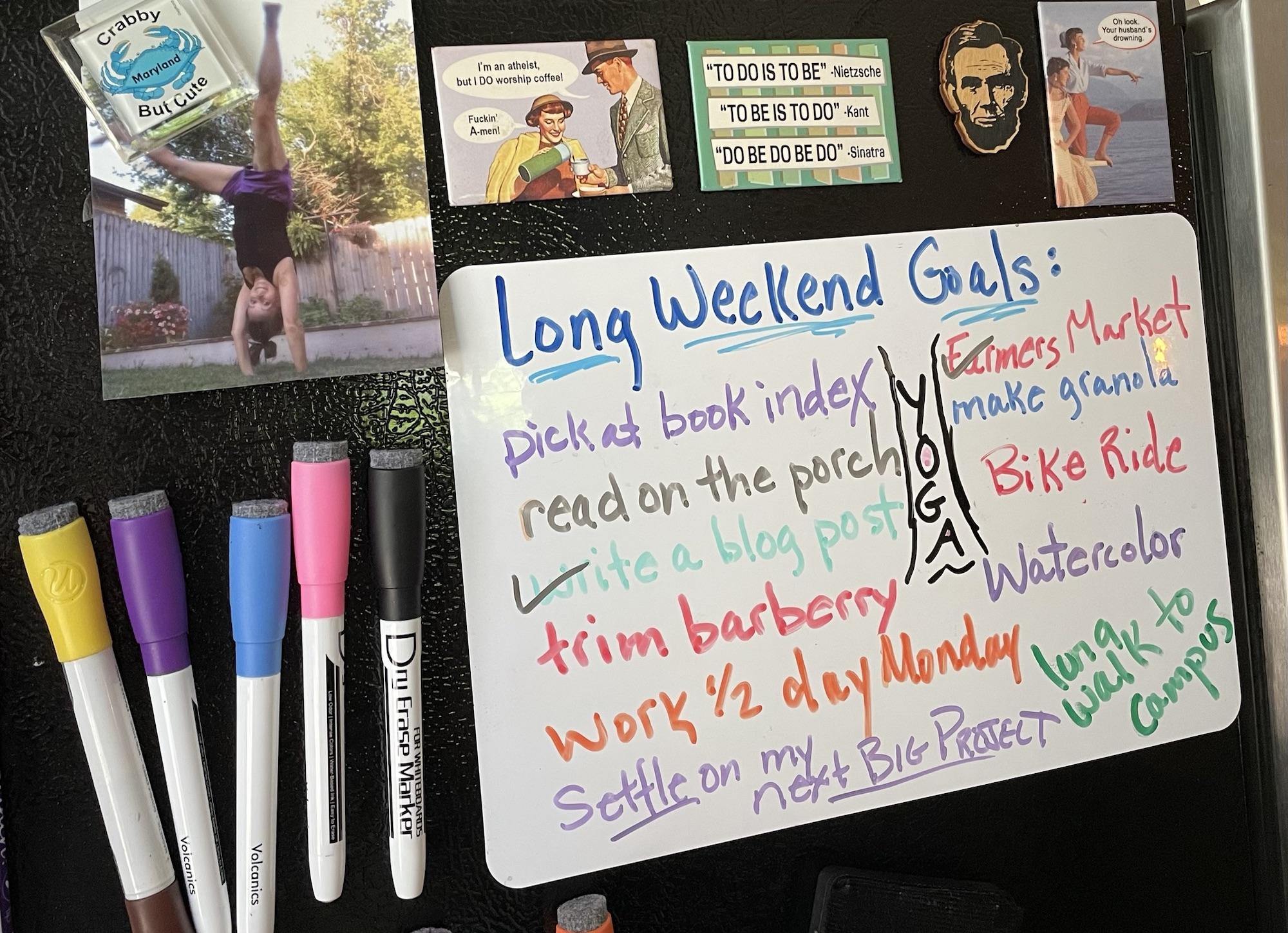
Seventy-two hours to fill was daunting at 7 a.m. and took a turn for the worst when Dorothy Parker Doodle acted a fool at the farmer’s market. Wrapping the leash around by legs and jumping up on vendor tables as I purchased pea shoots and spring lettuce and an apple pastry, she wrecked my concentration on Zen. By 8 a.m., back at home, the colorful list of goals I had written on the white board on the fridge was laughing at me.

Ha ha ha, bah ha ha, silly lonely old woman, just try to make that lazy list last until Monday at bedtime.

I added “work ½ day Monday” to reduce the time by three and a half hours and to calm my nerves. I stood there, with marker in hand, thinking about what else I could add.

Shampoo the rugs? No, you did that last weekend, and it only filled an hour anyway.

Pull the weeds on the brick sidewalk? Really? You want to hang out with a million cicadas?

Promise to make three watercolor paintings, one for each day of this interminable Memorial Day weekend? No, hell no, you know you should not promise final paintings, that is too much pressure for art therapy.

 Ok, how about a long walk up to campus and back? Sure, that’s ninety minutes down and time to think up ways to take down a few more.

This is the dance I do in my head every weekend when I don’t have plans to travel or see people and don’t have a big project going. Such dancing is why I am sitting on my sofa writing a blog post about how messed up it is that I struggle so much to see my way to the other side of a lazy weekend.

When I was a young working mom with a husband and a big old house and giant garden, I would have sold my soul to the devil for a long weekend to do nothing more strenuous than trimming one bush in the yard. I can remember the regular dejection of facing even a two-day weekend with not one hour of free time to read a novel in a comfortable chair. Now that I live alone, have a job that lets me let go at the end of a reasonable workday, and a porch that is heaven, I struggle with down time for even a few hours on a Tuesday, let alone a three-day holiday weekend with no travel or social plans in place.

It is mental. I know it is mental. It is also the audacity of privilege to be so, um…privileged to fret about my lucky leisure. But this is the anxious, still-learning-to-live-alone-and-be-alone me, with best friends far flung, and sitting right now in the uncomfortable space between big projects. I’ve learned enough about myself these past five years to know that my peace is thwarted by a steep learning curve to feel at ease with all my leisure time. Though I try to let the spirit of my cucumber-calm, easy-breezy Mack be my teacher, she sees no passing grade in my near future. Unlike her, I am incapable of happily passing one hour with only a family-sized bag of Cool Ranch Doritos to entertain me.

Heaven may be waiting for me on my front porch, but hell is a lazy day not working.

In so many ways, I am a super woman with superpowers. I am creative and productive, confident, wise, and comfortable in my beautiful, wrinkling skin. I get to spend my workweek with Jane Addams earning a queen’s ransom to study and write about history, one of the great loves of my life. I’ve just written my third book; and I know that not just anyone can write a book, and I am so proud to be among those who can. I have also curated a home perfectly suited to the peaceful path on which I have set my own two feet. I am well, and yet too much time to think can undo me.

Welcome to life, says life and then she adds:

Come on now, super woman old gal, you know that life is a constant journey to find balance and to be at peace when your center of balance is shifting. You know it will always be a struggle for you to be comfortable living alone, even though you want more than anything to be a bad-ass independent king-free Queen. You know you are a work in progress like every life is a work in progress, and you know you don’t need straight A’s in every goddammed thing in order to make good progress.

Yes. I know it. I know it all, especially that I am well. This is just an anxious space between big projects. This is simply the passing through Saturday to Sunday and Monday and into my future. This is an imperfect me still getting used to living alone. This is the anxious me learning to be as comfortable with my growing-learning-becoming times as I am comfortable in my beautiful, wrinkling skin. Some day, I hope Mack will give me a B+ for happily spending an hour on the sofa with a bag of Cool Ranch Doritos and doing nothing else and thinking about nothing else but eating those chips and enjoying them. I will dutifully and steadily march onward toward that day.

Although I spent the first morning of this long holiday weekend wobbled by the unfortunate trip to the farmer’s market, I realize upon reflection that this long holiday weekend feels a little less angsty than the last one. The list I prepared to survive this long weekend is more balanced. This time I feel more willing to give myself grace. And as I write this blog post (and knock off one of the items on my survival list), I feel considerably calmer. I am still afraid I have too much time on my hands and am worried so much leisure time will result in too much thinking and overthinking and anxiety. However, I am feeling freer to lean in the direction of leisure and, who knows, maybe I will pass this planned lazy, three-day weekend and almost like it.

Especially if I succeed with the most important item on the white-board list: “settle on my next BIG PROJECT.”

And there it is. The pressure. Right back on and screaming. I really am a long way to those lazy Doritos and a Mack passing grade, aren’t I? I said I was a super woman, not Superwoman. I can only promise to find a little heaven during this hell of a three-day weekend; and if I succeed in selecting my next big project, I’ll have enough good work to get me through at least the next year or two of long weekends.

Never 30

Mack should have turned 30 this year, but the world will pass another Mack-Day St. Patrick’s Day without her. I cannot picture Mack at 30, and it has cracked my broken heart wide open.

Mack in 5th Grade, 2004.

When Mack comes to me, tempting me to eat two donuts or telling me to be silly and stop it with the fretting, she is 10-years-old. Her freckled-face is dirty and grinning, her knees are scraped, her basketball shorts are five sizes too big, and her eyes are sparkling with mischief.

When I summon Mack for a chat, she is 20-years-old. Her hair is cropped short, her perfect eyebrows are framing the beautiful face she has only just grown into, and although her posture is casual cool, the cast of her gaze, straight into my eyes, is seriously wise.

When Mack comes to me or I summon her, she is never 30.

Mack and Me, 2014.

Mack will never be 30.

In October 2024, I will have known this fact for ten terrible years, but the truth of it hit me like blunt force trauma to my chest three months ago when the first of Mack’s best friends turned 30. Up until then, I was always able to imagine Mack living a life in her twenties, traveling, learning new things about herself, making new friends, and finding her professional path. Before three months ago, I could write stories of a life Mack might be living if the cosmos had given her the time she deserved. I could picture her as a junior writer for a sitcom, living a flip-flop life in Los Angeles with a St. Bernard and a Pomeranian, just a Mack-short walk from the beach.

Yet as time passed, I began losing the plot of every story I was writing for her. And now I have lost the plot entirely. Mack will never be 30. Not in life. Not in my stories. Not even in my dreams. I knew this failure of imagining would happen. I knew that time would buff out the sharpness of the future I envisioned for Mack as I coped with the loss of her. I knew it would be impossible to see any lines of time etched upon her beautiful face. I knew it. I knew it. I know it.

Mack will never be 30.

Recently, when I was walking my dog in the quiet of morning, listening to the birds and feeling the sun and the breeze upon on my face, I caught a glance of my reflection in a shop window. There was light all around me. My face was joy. My eyes sparkled. I was carefree, and it startled me. I had not been searching for joy or for peace when I set out on my morning walk, but both had found me.

The reflection I saw that day was not the face of a grieving, aging, lonely 57-year-old woman. It was the face of a 10-year-old, carefree girl. It was the face of a confident, easy-going, 20-year-old woman. It was the face of a bittersweet but hopeful middle-aged woman capable of finding simple joys and locating a moment of inner peace.

The 30-year-old Mack is not here. But the 10-year-old Mack is here. The 20-year-old Mack is here. I am here, too. And I will just have to do enough living for the lot of us. The spirits of that mischievous, fearless child and that grounded young woman will guide me, give me strength, and lead me ever onward to bloom joy and to paint my sparkle.

My two reasons for being: Mack and Savannah, 2004.

Out of Words

I have not been writing much this year. I am not quite myself, and I feel a little adrift.  Writing has always been my creative outlet, and since my daughter died my emotional release valve. Writing is how I understand the world, process pain, document joy, try out crazy ideas, and express thoughts I could never say out loud. It is frustrating to lose a tool that keeps me sane, but it occurred to me the other day that there is a good reason why writing is eluding me. I know why it took me the better part of a day to write a blog post for work and why when I sit down to write in the evening the blinking cursor stares me down.

I am out of words.

Writing is giving me a holiday because my brain is tired. I spent the last half of 2022 and all of 2023 preparing a 900-page edited volume for the Jane Addams Papers and writing my own book about women and Abraham Lincoln. Of course I am out of words. I used them all up!

And it is true I am not quite myself without them. I am adrift. But I am only a little adrift, which is to me, to quote Lincoln, a matter of profound wonder. I have been doing okay without writing for these first two months of 2024. I have been calmly weathering my missing words because I have a second tool to keep me sane. Watercolor.

Last July, my therapist suggested watercolor. We are working on my obsession with control and the anxiety that overtakes me when I don’t have it. She believed watercolor might help me feel the power of letting go, that learning to go with the flow of the water and the color making their own way across the paper might show me how calming it can be to loosen my grip. As a bonus, she was certain watercolor could compliment my writing.

I was skeptical. I am an old dog and afraid of new tricks. I assumed painting would frustrate me. I am not artistic, I said. I can’t draw, I said. Failure will make me sad, I said.

On my first day of painting, I ate all those stupid, doubting, self-defeating words.  And I have been painting ever since, completing, thus far, nearly 100 small watercolors. I do let the water and the color have a say, and I love the imperfect paths and the unexpected visions they reveal to me. I admit I try to control the water and the color more than my therapist would like, but I am learning to let go, becoming chill with imperfection, and laughing all the way. When I sit down to paint, I am as calm as I am when I sit down on my yoga mat. For a half hour or so I express myself in color instead of words; and there is so much joy in every silly, little painting I produce. In fact, I laugh deeper down in my belly at my failures.

I haven’t been writing this year, this is true. But I have been painting. And I am learning that expression is sometimes silent. I am discovering that painting is another way for me to understand the world. In my watercolors, I have documented joy, tried out a couple of crazy ideas, expressed some thoughts I could never say out loud or even write, and processed a lot of pain about by daughter, my dad, and my dog. Painting has become a part of my soul.

But enough already, missing words. I want to pursue the idea that watercolor might compliment my writing. Come back now please. I need to write. I feel you close as I write this post, and I want you back. Now, please. I want to introduce you to watercolor.

My Year in Books, 2023

Recently I was talking to a friend about books and reading, and she said: “Um, wait, you read a book a week?” I responded, “Yes, a little more, actually, but right now I’m nine books behind of my annual reading challenge goal of 60 books and I have become a reading slacker.” As soon as I said it, I realized it was bonkers to beat myself up for failing to read more than a book a week. Crikey. I work full-time, and this year I adopted a puppy and finished writing a book of my own! Ending the year at 53 books is hardly a failure. It is a triumph.

2023 was a terrific year of reading.

I read five exceptional books, two of which I added to my all-time list of favorite books (Demon Copperfield and Remarkably Bright Creatures) and another (The Keeper) that inspired me to think about my writing as art and to begin dreaming about a way to incorporate my newfound love of watercolor painting into a future book project. I read books this year that made me cry, made me laugh, and forced me to think differently about the world. I read three massive novels as well as a few light quickies. I read poetry, memoirs, two romances (what?!!!), a couple of thrillers, a biography, the eighteenth book of the Louise Penny detective series I love, and a book about quantum mechanics. In 2023, my brain was stretched by finishing a massive volume of the papers of Jane Addams for work and my own history/memoir, and so I let my reading for pleasure be lighter, choosing books and audio book for the pure joy of escaping into a good story.

Below I have ranked all fifty-three books of my 2023 reading list and provided the brief reviews I posted on Instagram throughout the year. It is an imperfect ranking. The muddy middle of books I gave three or two hearts were harder to sort, and I struggled a bit to weigh novels with nonfiction as well as books with excellent writing with books with important themes. The top ten is solid and the bottom six are well clear to my reading mind. But I will leave you to sort out the middle books you have read on your own terms and, perhaps, even offer comments.

I started keeping track of my reading four years ago, and I enjoy this annual reflection. Books are as important to me as breathing, and taking stock of what a read is as pleasurable as reading a delightful book on my porch, barefoot in the summer. It is a bonus to introduce people to a book I love, and there are many books on this year’s list to recommend. I mostly leave it to you to pick what sounds intriguing to your own reading brain, but EVERYONE who loves great literature and cares about humanity should read Demon Copperhead. Barbara Kingsolver is one of the brilliant writers of our time, but with this timely novel she has secured her status as one of the best American writers of all time.

Happy reading, and Happy New Year.

#1 Demon Copperhead by Barbara Kingsolver (2022) ❤️❤️❤️❤️❤️  Demon Copperhead is the kind of book that breaks your heart and makes you ask new questions about the world in which you live. Kingsolver’s story about rural poverty, the foster care system, and drug abuse (no, not drug abuse; rather the predatory drug pushing by doctors and coaches etc. onto society’s most vulnerable) humanizes the opioid crisis in a way even good journalism cannot. Don’t read this book if you hate to cry, and if you read this story and don’t cry, you need to go looking for a new heart.

#2 Remarkably Bright Creatures by Shelby Van Pelt (2022) ❤️❤️❤️❤️❤️ My surprise book of the year, this imaginative and compelling novel about a grieving mother and a grumpy, articulate giant Pacific octopus made me chuckle and cry and hold my hands to my heart. This novel is not a silly story with the gimmick of a talking octopus. It is a gorgeous tale of love found in the most unlikely places; and trust me, when Marcellus starts telling his side of the story, you will not dismiss him because he has tentacles. Last year I loved a book with a sentient fig tree and another with a precocious dog. This year it’s an imprisoned cephalopod with a tender heart. It turns out I like a story with remarkably bright creatures, human and otherwise.

#3 The Bookbinder by Pip Williams (2023) ❤️❤️❤️❤️❤️ I finished this extraordinary novel under my yoga garden umbrella and an extraordinary blue sky. Fitting, a sky so big for the ending of story so illustrative of the hopes and dreams and beauty of women. Pip Williams’ second novel, brilliantly linked to the first (The Dictionary of Lost Words), is glorious; a story of women’s lives, work and class, family and friendships, the divisions of Town and Gown, the power of books, and dreams set in the context of war. So bold and so human, Williams leaves no emotion left unexplored, and history and the human heart are the stars, as bright as the summer sun.

#4 The Keeper by Kelcey Ervick ❤️❤️❤️❤️❤️ In this lovely and lively graphic memoir, Ervick offers her whole heart. Readers can read and see and feel her story, and so much of it is the story of every woman, conforming and then chafing and then becoming who she is on her own terms. This is a book you read and KEEP and buy another copy for a friend (which I did.).

#5 To Paradise by Hanya Yanagihara (2022) ❤️❤️❤️❤️❤️ This book takes you on a long long long wild ride, and where it ends is your own place to write. Wow. I’m reeling a little, I think, from the creative scope of the stories, settings, and characters. The author doesn’t answer all of the questions she raises in her breathtaking tale, and the loose ends are a part of the messy, beautiful mystery of her characters’ human realities (and so I’m not even mad!). I chose the audio book, which is beautifully narrated by a talented cast, who made me cry and scream and laugh.

#6 Winter by Ali Smith (2017) ❤️❤️❤️❤️ Ali Smith is the kind of writer who not only creates memorable characters but who make you see the world through their eyes, glazed with the quirky colors of their unique realities. And the characters in Winter are a hoot. Smith is a sensitive writer of crisp prose, spare but rich. Her stories are great and her writing masterful. I loved this second installment of her seasonal quartet. Fine farewell, Winter, I cannot wait until Spring.

#7 Horse by Geraldine Brooks (2022) ❤️❤️❤️❤️ A racehorse named Lexington connects all the people and stories in this gorgeous novel, but the star of this book is Geraldine Brooks. She is so damn good. It takes an extremely gifted writer of historical fiction to artfully connect distant stories across 169 years. And Brooks is the best at weaving history into the present, in Horse covering 1850 to 2019, and illustrating every time for her readers that the past is never really past.

#8 Less Is Lost by Andrew Sean Greer (2022) ❤️❤️❤️❤️ To be human is to be awkward and out of step, to feel like you’re behind, that you may even be lost. No character in modern fiction more embodies this simple, beautiful truth than Arthur Less. Andrew Sean Greer is a wonderful writer. His style is crisp and delicious like a granny smith apple, sweet and good for you but just tart enough to make your lips smile. So funny. So warm. And genuine with a capital G. This novel is a fantastic follow-up novel to the Pulitzer-Prize winning Less.

#9 Her Lost Words by Stephanie Marie Thornton (2023) ❤️❤️❤️❤️ Thornton offers a lovely telling of the lives of two historically important women, Mary Wollstonecraft and Mary Shelley. This is excellent historical fiction, bending the story for drama but staying true to the language and contexts of the past. It is astonishing that the woman who wrote A Vindication of the Rights of Woman gave birth to the creative woman who wrote Frankenstein. Wollstonecraft died just days after Mary’s birth, but as this novel is correct to suggest that these women were connected by words and writing and the spirits of all brave women.

#10 The Dictionary of Obscure Sorrows by John Koenig (2021): ❤️❤️❤️❤️ A lovely, yearning search for words to define the bittersweet. An inventive dictionary for feelings too profound for common language, like: “harmonoia: n. an itchy sense of dread when life feels just a hint too peaceful—when everyone seems to get along suspiciously well, with an eerie stillness that makes you want to brace for the inevitable collapse, or burn it down yourself.”

#11 Women Holding Things by Maira Kalman (2022) ❤️❤️❤️❤️ I gave as a Christmas gift to myself this luxurious book of Kalman paintings of the simple, gorgeous act of holding. Art and wisdom and women holding the world. “What do women hold?” The home and the family. And the children and the food. The friendships. The work. The work of the world. And the work of the human being. The memories. And the troubles and the sorrows. And the love.”

#12 Autumn by Ali Smith (2016) ❤️❤️❤️❤️ This first installment of Smith’s seasonal quartet is lyrical and funny, loveable characters and a memorable relationship at its heart. Smith is a creative storyteller, her narrative here is a jumble of time frames and scenes, but somehow making more sense than strict chronology. I cannot wait to read the next three seasons.

#13 Lucy by the Sea by Elizabeth Strout ❤️❤️❤️❤️ Lucy Barton does the pandemic like she does life: imperfectly, but with humor and good intentions, no matter her doubts. “We are all in lockdown all the time,” she says, “we just don’t know it, that’s all.”

#14 The Violin Conspiracy by Brendan Slocumb (2022) ❤️❤️❤️❤️ The Violin Conspiracy is a compelling novel about the heart and soul of a musician, a violinist for whom music is the North Star. This is a triumphant tale of talent and determination playing louder than the racism and the doubters trying to knock a Black musician off the path of his dreams. The writing is solid until the end, which feels a little stilted and rushed, but Ray’s reunion with his beloved violin is not as important as his beautiful journey of becoming.

#15 The Many Lives of Mama Love by Lara Love Hardin (2023) ❤️❤️❤️❤️ Hardin’s memoir is a page-turning, straight forward story about addiction, belonging, struggle, fierce motherly love, and finding a path forward through an awful imploding of a life. The writer’s story is remarkable, and her honest telling is a triumph. If it is this hard for a woman of privilege to claw her way back from drug abuse, crime, and incarceration, what our deeply flawed criminal justice system must do to the marginalized is heartbreaking. This memoir is a beautiful personal story, but it should also be a wake-up call to the failures of our society to rehabilitate human beings, who are worthy of a second chance to be a light in the world.

#16 Babel by R. F. Kuang (2022) ❤️❤️❤️❤️ Slow burn this one (and LONG!), but in the way that makes you ponder. I am not going to try to explain the plot of this weird novel with footnotes, but this is a fun, funky and imaginative book about identity, power, knowledge, friendship, and the human consequences of colonialism.

#17 Happy-Go-Lucky by David Sedaris (2022) ❤️❤️❤️❤️ David Sedaris’s latest collection of essays is one of his best. He tackles the pandemic, the death of his father, dental work, sibling love, and Hugh (always Hugh😍) with his characteristic snark and astute observations of human foibles. I listened to the audio version read by the author. I always do, because listening to Sedaris read his stories is half the fun—he is hilarious, and this batch of essays gave me an extra happy case of giggles.

#18 An Immense World by Edward Yong (2022) ❤️❤️❤️❤️ This book was not an easy read for me, but despite the limitations of my own science brain it qualifies as accessible science. It is loaded with gob smacking facts about what humans have wrought upon the natural world and fascinating details about animals, both confirming my lifelong suspicion that animals are more complicated than we give them credit for being and cooler and more likeable than human beings. This book most importantly brings home that we are living in the Anthropocene Epoch. And that is not a good thing. If you don’t know what that means, look it up. It is important. No. It’s imperative. “Wilderness is not distant,” Yong writes. “We are continually immersed in it. It is there for us to imagine, to savor, and to protect.”

#19 A World of Curiosities by Louise Penny (2022) ❤️❤️❤️❤️ One of the best in the series, I think. Number 18, and still going strong. Classic Penny. Great characters, suspense, and fast-paced delight.

#20 Spring by Ali Smith (2019) ❤️❤️❤️ Spring starts out like a treatise on the shocking public discord in today’s western world, but it comes round to the stories of humans crossing paths. Smith is so good at bringing characters together, and this seasonal installment has a touch of mystery. The story screams and whispers and floats just a little bit beyond reality. I listened to this one, and the narrator’s voice was perfect, especially for the screaming.

#21 The Covenant of Water by Abraham Verghese (2023) ❤️❤️❤️ ‼️ SPOILER ALERT ‼️ I love so much about this book: the melody of the writing, the details of India, the humor, the food, and the matriarch. But it is just too bloody long, and when Big Ammachi died on page 519, I simply could not face the remaining 200 pages without her. The book sat on the coffee table for two weeks glaring at me, but now it must go back to the library. Because I could not finish it, I can only give it three hearts (although the writing is worth four hearts). Verghese should have hired a good editor and/or ended the book with this lovey sentence: “It will take time, he knows, to begin to trace the outlines of the massive rent in his life, in the lives of everyone who knew the matriarch of Parambil, and who knew baby Mol. For now it is too large to comprehend, and he bows his head.”

#22 Other Birds by Sarah Addison Allen (2022) ❤️❤️❤️ This sweet, ghostly story about an island of misfit human spirits might not go with me far into the future. But the quirky folks and those magical birds were nice to know for awhile. Sometimes a comfortable story is what I need, not great literature. Sometimes I prefer a little fantasy to the sharp, hard edges of reality. “Not everything has to be real to be true.” It did not hurt that I got to finish reading this enjoyable book on my front porch!

#23 Zero Days by Ruth Ware (2023). ❤️❤️❤️ Pure escape on adrenaline and worst nightmares is the stuff of a Ruth Ware novel. Zero Days is a good one if you like spending time in the head of a desperate, terrified woman on the run, which I do, I guess, because in every Ware story my own nightmares aren’t so scary. I never used to like thrillers (and still only rate the good ones with three hearts); but Ware’s stories offer strong women as well as adrenaline and escape. I recognize the women she writes, even if I cannot imagine what those women are going through as Ware unravels their lives.

#24 Cassandra in Reverse by Holly Smale (2023) ❤️❤️❤️ Cassandra Penelope Dankworth is a fusspot. And I love her. What a fun, silly, serious, human story about a lost young woman who finds herself in time.

#25 Justice for Animals by Martha Nussbaum’s (2023) ❤️❤️❤️ The beginning of this book made me sob, the middle made me stretch my brain, and the end gave me a little hope (but not much). Nussbaum’s philosophical argument is compelling, animals deserve justice for their own sake. I believe it, and as an animal lover and vegetarian, I celebrate any philosophy that will move our society and the courts to protect ALL animals. But in a world in which there are humans who do not even care about other humans, I am skeptical. Also, I know so many nice people who eat animals and are nowhere near to accepting the injustice and cruelty of the meat industry. After reading this book I am horrified I ate meat at all and that it took me so long to stop. A comment to my review posted on Goodreads read: “That the book did not make you consider veganism is a strike against it. All the nonhuman animals in the dairy and egg industries end up killed after they’ve been brutally exploited. The dairy cows and their calves suffer MORE than conventional slaughter cattle because of separation between mother and calf, lameness and mastitis.” I have not been able to get this comment out of my head, and I suspect I will get there. For now, I cannot live without butter.

#26 Victory City by Salman Rushdie (2023) ❤️❤️❤️ Rave reviews for Victory City were, I think, more for Rushdie than for this novel, but the sweeping tale of the woman Pampa Kampana and the city of Bisnaga she grew from seeds is compelling. It is a fable of the rise and fall of empire and the folly of men who even in the face of extraordinary evidence to the contrary insist upon the inferiority of women. The book sags a little in the middle, but I would recommend it to anyone who enjoys a story that reveals the complex nature of human beings, a story set in an unfamiliar past with human characters that are oddly familiar.

#27 The Hurting Kind, Poems by Ada Limón (2022) ❤️❤️❤️ A collection of whispering poems for every season—spring, summer, fall, winter, and pandemic. Uneven, for me and my untrained eye, but this poet’s voice is so vivid and there were so many lines on which I lingered and lingered and lingered, such as: “The thesis is still the wind. The thesis has never been exile. We have never been exiled. We have been in the sun…” That is a wrap on my books of 2023. I fell seven books short of my goal, but I read several long ones and wrote a book of my own. It was a wonderful year of reading; stay tuned for my reading review blog post coming soon.

#28 Normal People by Sally Rooney (2019) ❤️❤️❤️ Rooney’s tale of two young people is spare but brimming with humanity. From diverse backgrounds defying trite stereotypes, they cling to each other as they awkwardly grow into themselves and come of age in modern Ireland. I particularly appreciated all the things left unexplained and unknown by the author, because life is never a Hollywood ending. The best stories are messy, the details not always so clear, and the nuance an invitation to imagine.

#29 Dinners with Ruth by Nina Totenberg (2022) ❤️❤️❤️ Part memoir and part treatise on friendship, this book is poignant and packed with fascinating stories. I am a legal historian and a close watcher of the U.S. Supreme Court and enjoyed this book more than the average person might, but if you appreciate Totenberg’s brilliantly concise and accessible reporting on the SCOTUS for NPR, you’ll enjoy her memoir (she reads it herself for the audio version). For RGB fans, there is a lot of Ruth to go along with stories of Totenberg’s dinners with other justices across five decades.

#30 Helgoland: Making Sense of the Quantum Revolution by Carlo Rovelli (2021) ❤️❤️❤️ Yes, I read a book about quantum mechanics. No, I did not understand it. Of course not. But. I kinda sorta think I got the gist of it, all thanks to the writing talents of Carlo Rovelli. There were sentences in this book that blew my mind. Others made me scratch my head. Some made me feel like a complete idiot. And this one, depressing as it is, was my favorite: “Reality, including ourselves, is nothing but a thin and fragile veil, beyond which there is nothing.” That’s my key take away? Yes, it is, but I’m not really here, so…

#31 The Marriage Portrait by Maggie O’Farrell (2022) ❤️❤️❤️ Far less compelling than Hamnet, The Marriage Portrait makes a lot of literary florins out of the very short life of Lucrezia, a little-known member of the famous de’ Medici family. The novel is more historically inspired than solid historical fiction, but O’Farrell’s details are thrilling. Particularly titillating is her description of male genitalia, from the imagination of her horrified teenaged narrator, and is all by itself worth reading the book.

#32 The Revolutionary: Samuel Addams by Stacy Schiff (2022) ❤️❤️❤️ It was interesting to lean more about the great American revolutionary about whom I knew the least. He was a deeply principled idealist, whose talents and personality and passion were for made for a specific moment in time. Now I like the beer and the man.

#33 Daisy Darker by Alice Feeney (2022): ❤️❤️❤️ I enjoyed this thriller, set on a stormy night in Cornwall, about a family from hell and the story’s surprising ending that I never saw coming.

#34 The It Girl by Ruth Ware (2022) ❤️❤️❤️ Ripped through this audio book fast and furious, unable to wait to hear the mystery unfold. Ware is a master at the page-turner, and this week in the winter cold I needed a good escape. Imogen Church was the reader, and she was brilliant as usual. I would listen to any book she reads.

#35 Romantic Comedy by Curtis Sittenfeld (2023) ❤️❤️❤️ Light, amusing, and sweet, Romantic Comedy is, well, um…romantic. Not my usual genre, but I’ve been letting Book of the Month Club broaden my horizons or, more apt, I suppose, lower my brow. This was my first Sittenfeld book, and I’ll read more; she delivered an enjoyable summer read with this one.

#36 The Vulnerables (2023) ❤️❤️❤️ A novel in one breath, held in the long dark night of the pandemic. Life and writing sputter and spin the narrator, a writer, fast, slow, and forward. Nunez is such a good writer, and this novel has beautiful sentences to recommend it. I found it, however, a little too spare.

#37 Taste: My Life through Food by Stanley Tucci (2021) ❤️❤️❤️ Minus the gleeful cooking and eating of animals, (including whales!) and an erroneous attribution to Dorothy Parker, this is an entertaining memoir about food as a way of good living.

#38 Tom Lake by Ann Patchett (2023) ❤️❤️❤️ A perfectly nice story about a nice woman and her nice family, the paths we choose, and the love and the people we leave behind. The writing is good, but for me reading this novel was only slightly more entertaining than watching the grass grow and not quite as interesting as counting the box cars on a train while waiting at the crossing.

#39 A Wing and a Prayer by Andrea and Beverly Gyllenhaal (2023). ❤️❤️❤️ A sobering tale of the shocking decline of bird populations around the world. Two bird lovers set out to explore North American efforts to save endangered birds, protect bird habitats, and encourage people to watch birds and to do simple things to protect them. The writing is not great, but the message is important.

#40 Throw the Damn Ball, Classic Poetry by Dogs (2013) ❤️❤️❤️ A very appropriate Christmas gift from my niece, this is a silly, clever, fun little book filled with hilarious pictures of dogs. And, of course, a play on a Dorothy Parker poem made it into the collection!

#41 The Half Moon by Mary Beth Keane (2023) ❤️❤️❤️ The Half Moon is not a terrific book, and I wouldn’t recommend to my most discerning reader friends. However, it’s a surprisingly good anatomy of a marriage from both sides, all guts and no glory, and the shit that happens that opens our eyes or leads us astray. It’s a he-said-she-said narrative, which makes the miscommunication a character on its one, equal to the wife and to the husband and to the neighborhood bar they own in the middle of all of it.

#42 The Vaster Wilds by Lauren Groff (2023) ❤️❤️❤️ Ugh. This was not an enjoyable read. The writing was good, and the descriptive quality and suspense was superb. However, I struggled to cope with the horror of a story about what happens when human beings are reduced to base survival. Not a novel for the softhearted. I appreciate the creative perspective and the writing in this book, but I chafe at the subject matter and bleak landscape of the story. I have enough nightmares of my own.

#43 Cake: A Cookbook by Maira Kalman (2018) ❤️❤️❤️ I bought this book for a baking friend but read it first, before I wrapped it. Kalman’s illustrations are enchanting. And who doesn’t love cake?!! I’m only ranking it at the end of the three-hearted books because I did not assess any of the recipes (although I read them all and they looked amazing).

#44 The Family Upstairs by Lisa Jewell (2019) ❤️❤️ This book is dark and witty, and the character Henry diabolically (and delightfully) so. I’ve come to appreciate the ability of a good thriller to take my mind away from my hum-drum life for a time, and I find Jewell’s stories an enjoyable short vacation.

#45 The Hotel Nantucket by Elin Hilderbrand (2022) ❤️❤️ This was a mindless, mildly entertaining read, chosen to get my mind off of my busy life. I would not recommend it to anyone who enjoys serious literature. It was a little too Hollywood-happy-ending for me, but it took me away for a little while and accomplished what I asked of it. I would have enjoyed it better had I actually read this “beach read” on a beach.

#46 The Last Heir to Blackwood Library by Hester Fox (2023) ❤️❤️ Fox’s novel was a fast and fun read. I liked the mystery in the beginning of the book, but I was less enamored with the answer to the mystery and the smoochy, romantic, happy ending. Good to sappy in 334 pages.

#47 The House Is on Fire by Rachel Beanland (2023) ❤️❤️ This novel tells the story of a historic theater fire in Richmond, Virginia, in 1811 from the perspective of four characters affected by the fire. Although it is a fairly well-told story, based on good research, I didn’t love it. The tone was off and the dialogue too modern. P.S. I listened to this book, and the uneven narration may have diminished my enjoyment of the story.

#48 Trust by Hernan Diaz (2022) ❤️❤️ I suppose I can admit the structure of this book is interesting. Sort of. But the story is BORING. Duller than dirt, which is an insult to dirt because at least dirt grows flowers. I do not recommend this book, and I am at a loss to understand why Barbara Kingsolver’s superb Demon Copperhead had to share the Pulitzer Prize with it. One star because I finished it (out of respect for the Pulitzer Prize, although why I respect the Pulitzer committee for fiction I do not know, as it is frequently off in outer space). Another star for the last part of the book, which is weird but interesting, although hardly worth the slog through the pages leading up to it.

#49 Canary Girls by Jennifer Chiaverini (2023) ❤️ Disappointing. Maybe because soccer is boring. But probably because the author failed to make me care about women munitions workers during WWI, a subject that should have been easy for a historian of women’s history to enjoy.

#50 Hello Beautiful by Ann Napolitano (2023) ❤️ Meh. Actually, quite a yawn fest if I am honest (which I am, of course, honest like Lincoln). If I read this book instead of listening to the audio version, which helped me go to sleep for several nights, I doubt I would have finished it. Surprise, surprise, I’m sideways on yet another NYT bestseller, but this slow-moving family saga, covering the years 1960-2008, is a drag and told by four of the family members, not one of whom I would care to befriend.

#51 Checkout 19 by Claire-Louise Bennett (2022) ❤️ Meh. Not a fan of Checkout 19. Or perhaps I am just dumb, because all of the reviews I read about this book could not have been written about the book I just read. It was weird, incoherent, and jerky. The narrator has the habit of telling the reader something and then saying “yeah, that’s right. That’s right. I did.” Annoying and distracting. And disappointing.

#52 Thrust by Lida Yuknavitch. ❤️ Oh boy. Whoa, okay, so, what to say about this one? In the beginning, I thought it was strange but brilliant. In the middle the doubts were creeping in. By the end I felt duped by weird for the sake of weird and structure thrown out the window with no good purpose. I am perplexed. How do books like this get published? There are a handful of astute statements about inequality, colonization, and violence, I suppose, but for what? Do I care for the characters—including a time traveling girl, a talking whale, and the Statute of Liberty? No. No, I do not. Do I understand anything I just read? No, because the author has failed to convince me that I should try. Run away from this one, people. Run TF away.

#53 The Fraud by Zadie Smith (2023) zero hearts, because I did not finish it. The Fraud is a fraud, sorry. I wanted to like what everyone else seems to like in this novel. Alas, I failed to get into it. Boring is all I can say. And bummer.

That is a wrap on my 2023 reading. Now bring on the great books for 2024.