Mack-Day Mood

Today would have been, should be, Mack’s twenty-sixth birthday. Maybe twenty-six would have been the age when she finally admitted she was a “grown-ass woman.” Oh, probably not. Who am I kidding? It was a status she was never eager to attain. When she was ten she declared to me her intention to remain ten forever, and I could see in her dirty, freckled face that she was speaking her truth. I never doubted the veracity of her assertion, either, because even when she became a serious student in college she never let go of the child she was at ten. Both of her parents are old souls, but a youthful heart was in Mack’s DNA. She inherited my father’s Peter-Pan gene, the gene that sits between the goofball gene and the I’m-gonna-eat-junk-food-and-sit-on-the-couch-in-front-of-the-TV-all-day gene. She inherited both of those other genes from Frisky Pratt, too.

As Mack’s inner circle of close friends are each making their own way in the world now as grown-ass women, I have been passing many melancholy minutes lately wondering where Mack might be living and what career she might be pursuing if she was still here. So deeply pulled into these wonderings, or daydreams I guess you might call them, I sometimes wake up and fifteen minutes are lost and a vivid scenario of Mack’s could’ve-been life is flashing like an illustrated storybook in my brain. Mack dreamed of a writing career in television, and that is my favorite daydream for her. She’s a writer for a sit-com in Hollywood. She’s working with Joss Whedon to bring back Buffy the Vampire Slayer. She’s pitching Mack’s Makin’ Bacon, her own comedy cooking show for the Food Network. Or she’s living in my guest bedroom writing a screenplay. Goodness but do I yearn for that latter daydream. But daydreams are not terribly productive, I’m afraid, and Mack’s old-soul Momma Bear usually awakens from those daydreams emotionally bruised, sadness giving way to anger at all that Mack missed out on and all the things that have happened that I have been denied sharing with her. Like her twenty-sixth birthday.

Milestones like birthdays are trigger points for grief. The day will be rough. There isn’t enough candy in the world to sugar coat that truth. The paradox of my grief is that every day I must live in a world without my daughter, I get another day of practice living in a world without my daughter. The pain is no less keen, but the callouses of long-time sorrow limit the blood loss when the sharpness of a milestone, or a bad day, break open the heart. Again. And again.

I will no doubt pass a few melancholy minutes. However, I won’t be wondering what Mack would be doing on her twenty-sixth birthday, because I’ll know exactly what she would be doing if she was here. She would be embracing social distancing, happy for an excuse to be alone on her couch in front of the TV, eating junk food. She’d settle in for a birthday-binge-watching bonanza, surrounded by Funyons, Flamin’ Hot Cheetos, sour candies, two giant cans of Arizona Iced Tea, and the best looking Italian sub, wrapped in plastic, that was available in the deli case of the convenience store where she shopped for her birthday feast. She would get comfy with her two dogs, one an Irish wolfhound and the other a pug, and both named for characters on television (maybe Leslie and Ann, but who knows with that kid?). She would spend the day watching shows she’d already seen a hundred times, consume her food in cozy sweatpants and reclined repose, text her besties and her momma and her sissy, giggle to herself, and tweet about the upsides of quarantines and restaurant closings and how she wished her school had been cancelled for a month when she was a kiddo.

Mack would not be mad that COVID-19 ruined her birthday, cancelling dinner plans or drinks with friends. She wouldn’t see it that way at all. She would look at the down time as a chance to relax, be alone with her own thoughts, and do absolutely fucking nothing. Every day I miss Mack, and today I’ll miss her more. Every day I talk to her, and today will be no different. She’s heard a lot of swearing lately, because I frequently dial her in for my dialogue with the morning and evening news. She’ll laugh as I let the f-bombs fly, and she’ll shake her head at me because she thinks I let the orange moron and his clown-car of a government get too much under my skin. “Sure, Momma Bear, he’s a genuine ass,” she’ll say, “but don’t let him push all of your buttons.”

As soon as my eyes pop open I’ll miss kissing Mack on that big freckle on her left cheek. I’ll shed some tears into my morning coffee. I’ll take Mack with me to vote in the Illinois Democratic Primary, let her pick which old codger I vote for, and I’ll tell her how furious I am that I didn’t get to vote for Elizabeth Warren. I’ll try not to swear at NPR, protect one or two of my buttons, and take Mack’s lead and relax. It’s her birthday, after all, so we all should let her make the plan. I’ll probably need Mack’s spirit to stick around for the entire day, and maybe she’ll bring her grandpa with her. I trust Mack will chill me out when I get upset that COVID-19 is keeping me from the draught Guinness I traditionally enjoy on her birthday. I trust she will keep me grounded in the present, holding my hand as I take the day as it is and give myself up to the cool breeze of life, hitting my cheeks and reminding me to live and to breathe and to refrain from counting the calories and the dairy content of the Mac-n-Cheese my sister is planning for dinner.

Leprechaun 2

Mack Day 2020 will be a rough day. That is no lie, and certainly no joke. But when it’s over, I will put my head down on my pillow next to gratitude. Gratitude for Mack and her presence in my life. Gratitude for the vibes of a Mack-Day mood. For twenty-six years, first in person and now in spirit, my daughter has been teaching me about life. I am not always a quick study in Mack’s be-chill school, but old souls always at least try to be at the head of the class. I am a work in progress, and Mack knows it. I’ve got a sneaking suspicion she hangs around not only to tease me and to teach me, but to make sure I don’t beat myself up for not getting straight “A”s.

Fiction and Truth

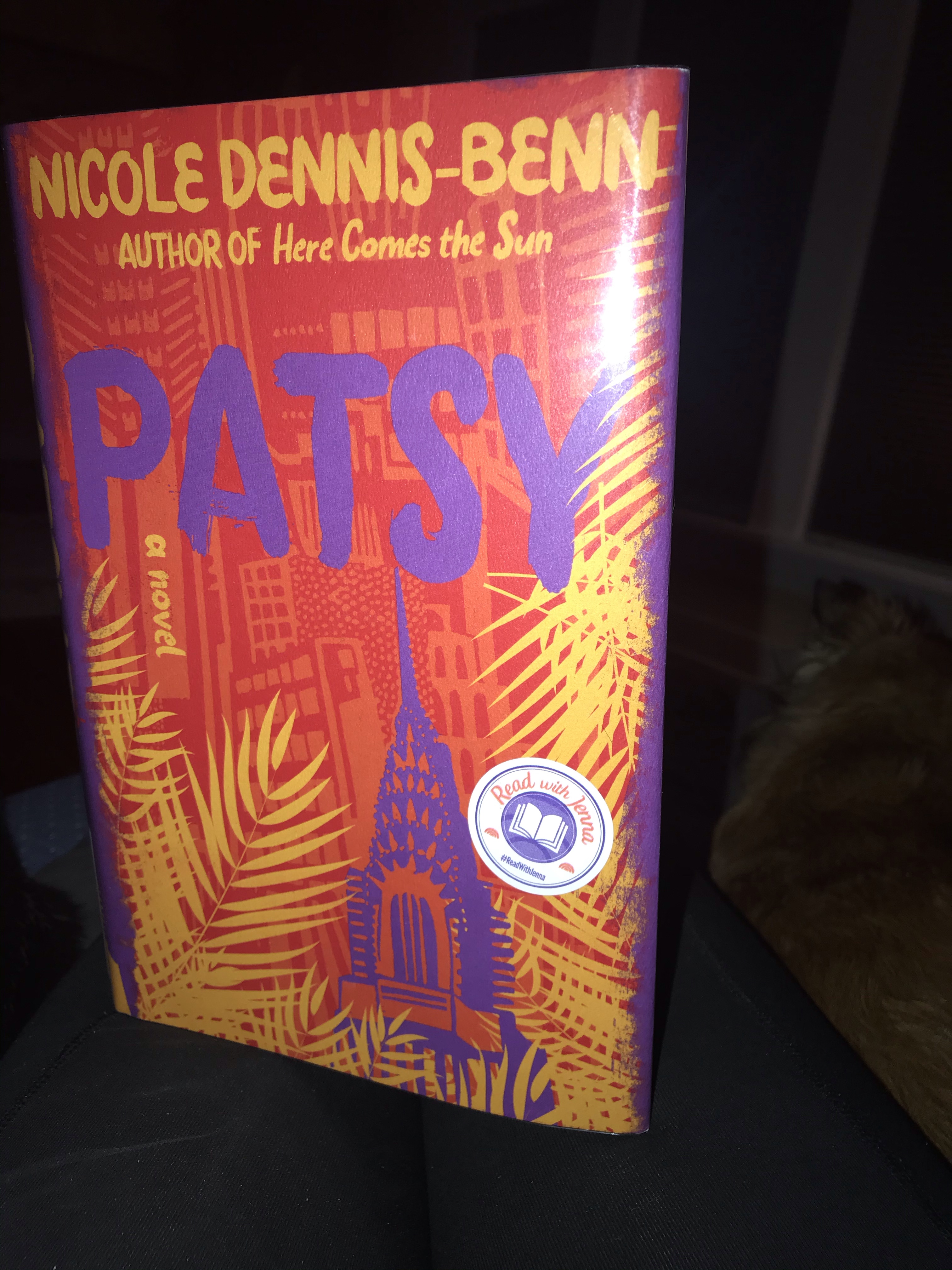
I started reading Patsy, a novel by Nicole Dennis-Benn, for a book club I have just joined. As I read and floated into the book on the soft clarity of the writing, I tried to understand the title character, who in the very early pages of the book abandoned her five-year-old daughter Tru in Jamaica to move to the United States. Patsy wasn’t rich in Jamaica and she lived in a depressed, struggling town; but she had a decent secretarial job and a family, food on her table, and a lovely and smart little girl. Unlike so many immigrants who leave their homes to better the lives of their families, Patsy was not going to America to make a better life for her daughter. She was going for her own selfish reasons; she was leaving her daughter to be with her best childhood friend. When Patsy left Jamaica, she lied to her daughter in her sweet little face that she was coming home. Patsy boarded a a plane to New York, leaving her daughter to live with a father she barely knew, and she had no intention of ever returning to retrieve her.

My tolerance for Patsy decreased as I turned every page, the prose quickly incapable of overcoming the pain the narrative delivered to my heart. In the early pages, as Patsy settled in with her friend’s family in New York, while she learned how to navigate her new city, and when she applied for jobs as a nanny, Patsy gave me no reason to understand her. She offered no righteous explanation for the abandonment of her daughter. She was shallow and cruel, and I did not wish to know her.

I have a hard and fast rule about the books I read for leisure. I give them twenty-five pages to draw me in; twenty-five pages should be enough to make me love them or at least want to keep reading to see if I can love them. There are too many good books in the world that have the potential for making my heart sing to spend time reading even one that makes me miserable. But in this case, I turned page 25 and kept reading, no matter how much the story was breaking my heart and making me angry. I read for the sake of the book club. I did not want to attend my first book club with some people who have not yet met me without having read the book in its entirety. Without having given the author a fair trial. Without having given Patsy time to make me know her, to want to know her. 

On p. 115, Patsy decided to call home. Finally. After weeks in the United States—while poor Tru cried and cried every day and desperately yearned for her mother—Patsy finally picked up the phone to call her daughter. Just as she heard the child excitedly rushing to the phone to talk to her mom, Patsy put down the receiver. A coward, she hung up on her baby, and abandoned her all over again.

I could read no more after that.

If this book was memoir instead of fiction, I would have tried harder to empathize with Patsy’s choices and her motives. I would have given her time to explain why she gave up her precious child. But does a fictional character deserve the same effort, the same time, the same compassion? Does a fictional bad mother deserve the same human consideration? The old me might have said yes for the sake of good prose. Fiction is supposed to stretch the boundaries of what you think you know and understand. It can reveal what the truth cannot. Maybe the old me would have been more patient, as the story of Patsy unfolded. But the present me was failing to sympathize with a fictional mother who turned her back on her child. The present me has no time for untrue horror stories with which I possess no responsibility to grapple.

In my new realm of existence, I have no tolerance for despicable or shallow fictional characters with whom I cannot relate. I see no compelling reason to read a novel about a fictional woman who chose to abandon her daughter when I am a real woman forced to live without one of mine. Reading past page 25 was my own damned fault. I should not have let the author who dreamed up this character to punch me in my heart for ninety pages after I knew better than to keep reading. Yet I cannot help but feel like it might be partly the author’s fault, too, that I feel so aggrieved, that Patsy throws such sharp elbows against the bonds of real mothers and daughters.

Maybe Patsy turned out okay for all of the characters in the end. If it were memoir and I had stopped reading, I would have checked in on Tru and made sure she was okay, at least. But because it was fiction, I can let it all go now that I have written my peace about it. Good writing alone just doesn’t cut it for me these days. Good writing cannot atone for characters with whom I could never connect on a human level. I don’t want to spend time with fictional characters I would not wish to know in real life. Not anymore. Life is hard enough without letting a work of fiction beat me upside my heart. Life is too short to read books that poke my grief with a stick.

img_9624

Silence

The radio scratches in my ears, and from the back seat I can just make out the balls and strikes count through the AM static. My little sister is next to me in the back seat, jabbering to my mom, who is the front passenger seat, her head turned around jabbering back at my sister. I have no idea what they are saying, and I do not care. I am trying to read my book.

My dad is driving and smoking and keeping a score card. The car windows are cracked open to keep us from choking to death, and the wind noise is crashing into the radio static, occasionally mixing with a sudden clarity of the radio signal and the baseball announcer calling a play at the plate. My dad curses and bangs his fists on the steering wheel, and the Reds are losing, and still I am trying to read, dammit, and we have another baseball game worth of driving, and I am losing my mind in the chaos.img_9486

Can’t the quiet of my book overcome us all? What would be the cost of one hour of silence in this car? What could I pay them to whisper? Why is there always radio static and sisters and moms jabbering and wind noise and dads yelling at baseball games?

Today, I live alone. Silence is a precious joy of my life, treasured, filled up with reading one book after another, with New Yorker magazines sprinkled in between. And oh my goodness, but the quiet is divine. But there are days when I would trade in all of my books and my solitude for one hour in the backseat of the car in the chaos of my childhood, my mom and sister jabbering away, my mind unsettled by the wind noise and the Reds playing on the radio through AM static, and my dad cursing the blown call at the plate.

*****

Note: I was lucky and am grateful to have been invited to join a monthly memoir writing group called Past Forward. It is a group of bold and brave people who write their hearts and memories and share their writing with each other. For each meeting, we write from an advance prompt on a particular topic or theme, and when we get to the meeting we are presented with another writing prompt on which we write quietly for twenty minutes or so. After the writing, we spend the remainder of the time sharing our prepared and spontaneous writing with the group. It’s a courageous new experience for me, reading aloud my creative writing, and it is stretching me in wonderfully uncomfortable ways. Some of the most enjoyable writing I have ever done has taken place in the quiet space of that spontaneous writing, sitting in a circle with other writers who are willing to share and to listen. I wrote this piece at the most recent meeting, the spontaneous prompt was “Silence.” 


Women Walking

Nearly every single day in my professional work as a scholarly editor, I learn wonderful and random historical facts and fascinating untold or little known stories about the American past. While my research focus each day may be very specific, looking for a date or trying to identify an obscure reference in a letter, my eyes are always wide open for facts or stories that reveal the humanity of the historical figures I study.

JL at desk

Julia Lathrop at work at the Children’s Bureau.

Recently, I was scanning through a biography of Julia Lathrop and mining information for a series of footnotes on this important reformer and close friend of Jane Addams. Lathrop, a native of Rockford, Illinois, and a graduate of Vassar College, was a social settlement worker and resident of Hull-House in Chicago for twenty-two years. During that time, she investigated and wrote about tenement and labor conditions, drafted and lobbied for labor laws to benefit women and children, became the first woman appointed to the Illinois State Board of Charities, worked for the protection of immigrants, helped establish the Chicago School of Civics and Philanthropy, and contributed to the development of a juvenile court system in Chicago, which was a brand new thing under the progressive sun. And as if all that work in Chicago and the great state of Illinois was not enough, she became the first woman to head a federal agency when President William Howard Taft appointed her to head the newly created Children’s Bureau in the Department of Commerce and Labor in 1912. In that post, Lathrop established the hard-hitting mission of the agency and won fame and widespread respect as a leader. She retired in 1921, having accomplished the life’s work of at least a dozen good men.

I am in awe of Julia Lathrop. She was a fearless, funny, brilliant, fierce, sharp-dressed, bad-ass, social justice warrior. I am just an editor and historian, who is only occasionally funny. I wear yoga pants and study social justice warriors from the comfort of my home office. Julia was a super hero, and Stacy is just a scholar who is lucky to study the life-changing work that the women of Hull-House did to make the lives of children, women, laborers, and immigrants better at a time when women were supposed to shut-up, stay at home, and take care of their own familes. Nothing more.

So, okay. I’ve got nothing in common with Julia Lathrop, right? I am not fit to shine that woman’s patent-leather, Edwardian boots.

But then I read in the Lathrop biography one of those human stories for which I am always on the prowl. All of sudden, I could picture the two of us, J. Lathrop and Dr. Stacy, spending an hour or two together, walking. Because holy cow, and oh my lands, it turns out that Julia Lathrop was a walking fool, just like me! Lathrop starting walking for exercise when she was a student at Vassar, which encouraged outdoor activities for women, and she was a life-long “just do it” walker. Not casual strolls around the block or through the park. Nope. Not for me, and not for Julia, either. I’m talking about regular, serious, long-distance, walk-even-if-you-don’t-have-to kind of walking.

On Thanksgiving Day in 1919, when Lathrop, age 61, was the head of the Children’s Bureau and living in Washington, DC, she set out on a long walk with her friend and Children’s Bureau colleague Grace Abbott. Lathrop was an affluent woman and agency head who could have easily called for a car and driver, but she wanted to walk the three miles to the Pan American Union Building to attend an international labor conference. And so, she walked the three miles and made an appearance at the conference, where she no doubt uttered a few brilliant statements about her work and probably disarmed at least one over-important man with her charm and good humor. After the conference, she and Abbott ate some Chinese food with friends and then walked the three miles back home.

I love this story! It is precisely the kind of human story I look for amid the lofty historical facts of the lives of the American super heroes I study. I am captivated by the idea of Julia Lathrop walking across Washington, dressed, no doubt, in a fine frock and a hat that was the bee’s knees. She was an accomplished, successful, extraordinary woman. Yes, she was, indeed, a super hero. But in one way, she was just a woman. A woman who walked. Just like me.

JL-JA-MM

Julia Lathrop, Jane Addams, and Mary Wilmarth in Washington, 1913.

Note: Both images are from the Prints and Photographs Division of the Library of Congress. The digital images available online are amazing and easy to search, browse, and enjoy. Click the link, type in a subject that interests you, and see for yourself: http://www.loc.gov/pictures/

Writing Peace

Writing a memoir walks a fine line between therapy and self-destruction. I know it, because that is what I have been doing since February 2019. I have been writing a memoir and walking  a delicately fine line between healing my shattered spirit and endangering any healing progress I have made since losing my sweet Mackenzie in October 2014. Honest reflection is tricky business, and my honest report is that peering into your soul is both perilous and breathlessly rewarding. Finding the words to explain and to understand the difficult and winding path of my journey through grief has been a balancing act, indeed. But the reward for finding the words and striking that balance, through the very process of the writing itself, is peace.

When my daughter died, writing was the weapon I selected to battle my grief and to repair the many damages it inflicted upon my body and my being. Writing became my assertion of agency against the frailty of my humanity. The process of writing became a search for peace and the practice of writing its own kind of solace. Five years of steady writing—137 blog posts here at Being Mack’s Momma Bear and a nearly 200-page memoir of my experiences with grief redefined for me the meaning of peace and showed me how to find it.

When I started writing for my life, I did not understand that peace is not a destination; it is not a paradise at the end of a long journey or a utopia you win after a hard struggle. Rather peace is a state of mind you achieve for yourself at the precise moment, any moment along your way, when you find your balance within the disorienting storm of living. Every time you breathe in joy and exhale pain in the same breath, or level your achievements with your disappointments, or bank love against loss, or successfully walk the fine line between your therapy and your self-destruction, peace is your gift. Peace is not the absence of pain and sorrow; it is the acceptance of the hardships of living along with the precious gifts of being human. Peace is not a reward for traveling, it is your traveling companion.

Some people learn this truth far earlier in their lives than I did. Some people are born with this wisdom. Mack was. I think for most of us, however, real peace only comes after a great deal of eyes-wide-open, whole-hearted effort. For me, it was revealed through difficult, personal writing and honest evaluation of my experience with grief. My writing began as a personal journal but quickly became my therapy, and it was, ultimately, also a companion, a witness, and a great teacher. As I stand here at the doorway of a brand new decade, I am healthier for having spent half of the last decade writing my grief. I credit the personal writing I published on Being Mack’s Momma Bear for leading me toward peace and the memoir writing for revealing to me my capacity for finding it.

For the rest of my life, surviving the loss of my daughter will require eyes-wide-open, whole-hearted effort. A mother’s grief does not fade. I know there will be times when I will fail to maintain my equilibrium and to walk peacefully with all of my love for Mack and with all of the pain of losing her. Mack is still with me, I converse with her each and every day, and she will be with me for the coming decade, just as she was in the previous two. I am not done writing about my daughter. I am not done writing about my grief. I have just finally arrived at a place in my journey of grief that requires less therapy.

Castle 7

Mack in Monsaraz, Portugal, 2011.

Going forward, Being Mack’s Momma Bear will remain a space for me to share my memories of Mack and continue to process my grief when the need for it arises. Writing will always be the therapy I choose first for healing. But Being Mack’s Momma Bear will also be a space for me to write about books and writing, dogs, walking and yoga, friends, food, flowers and birds, history, politics, and peace. No matter the headspace I inhabit— mom, friend, professional historian, dog lover, bad poet, angry liberal voter, or middle-aged, single woman trying to understand our crazy and beautiful world—I am still Mack’s Momma Bear. I will always be Mack’s Momma Bear.

And so I keep the name Mack herself gave me, Momma Bear, to honor her; and I retain the blog title Being Mack’s Momma Bear to memorialize the continued presence in my life of Mack’s inspirational spirit. Hopefully, with a lot of grit, a little grace, and a dash of Mack-style humor, I will offer some insights about history and life along the way, share some honest reflections that might be of use, and serve up some simple truths about the loving, grieving, thrilling, terrifying, lonely, joyful nature of being human. 

Peace, and Happy New Year to you all.

Back Camera

Me in Monsaraz, Portugal, 2011.

P.S. Wish me luck with the memoir. I spent half of one decade doing the personal work and writing it required, and editing and publishing the manuscript is my first goal for the new decade. 


Permanent Pain and Bright Beginnings

Five years ago today, the beautiful world fell into darkness when the light of our lives left us. Mackenzie Kathleen McDermott was a beaming smile of sunshine, a giggling goof of joy, and a bulldozing force of nature. Her absence left holes in the hearts of everyone who loved her, holes that can never be refilled.

Five years have filled no holes. Five years have healed no pain. Five years have not made me miss her less nor feel her a absence less keenly. In fact, some days–days like today–I miss her more than ever.

Balance is the lesson I have learned in the deepest grief of a mother’s broken heart. Every day I must balance my love for Mack and my permanent pain from the loss of her. Every day is a struggle, but on the good days, sprinkled in between the bad and the okay and the barely breathing, I can find that balance. I can take hold of some peace and find some solace. I have that scar upon my heart, yes, but joy and beauty and light are possible.

Today, Savannah is starting an exciting new job. Today, I am moving into a charming old house in a new town. Today, Kevin starts looking for his own path, too. Today is going to be one of those days when balance is vital, as our little family carries all of our pain and all of our love forward into the next five years without Mack.

Today I walk with sorrow, but I also walk with hope and the real prospect of peace. I walk onward into the sunshine of this bright beginning.

Chance Meetings and the Connection of Spirits

It was cold for late April in central Illinois, and the sun was reticent behind dense gray clouds resolved to keep the blue sky far away from Saturday. The day was drizzly and windy and raw to match my mood, and the chill nipped my bare ankles when I stepped from the car. But as the four of us walked up towards Mack’s gravestone, the breeze blew a little lighter on our cheeks. The rain clouds offered amnesty to mourners, and I would have bet a hundred bucks if I had had it in my pocket that the temperature ticked up a bit on our behalf, too. The painted landscape of spring lifted my spirits, and the white and pink petals of the dogwoods were luminous in the gloomy shadows on the first day of their full bloom. The colors were perhaps emboldened against the backdrop of Oak Ridge Cemetery just bursting into the opulent shades of spring green. Mack-greens, I thought. Beautiful like her. Brilliant like her. Dazzling color worthy of her true spirit.

Alicia, Maureen, Sandra, and I had gathered together for a Springfield-ladies reunion of dinner, drinks, and deliberations on books, politics, and life. Before dinner, we wanted to spend a little time with Mack. It was my first visit to Mack’s grave in four months, and I was grateful for the company of dear friends. The more time that passes the harder I find it is to return. One might think it should get easier. I once thought it would get easier. But it didn’t, and it won’t, and I guess it never should be comfortable to visit your child in a graveyard. I visit Mack because of the tangible feeling of peace it offers, although I never relish the pain it also touches upon my heart. Such is the experience of grief that one thing can be good and bad and situate you in all of the complicated spaces in between. Some visits to Mack’s grave are therapeutic. Some are devastating. Each has a character all their own, but this would be the first one I would characterize as weird as well as wonderful.

Sandra, who lives in Springfield, brought the flowers, a sunshiny mixture of daisies, chrysanthemums, and carnations, and she placed them in the urn she had stuck into the ground on a previous visit. There were no tears that gloomy yet colorful Saturday, but they were at first on the edges of our actions and on the surface of our stories. I swept the dust from Mack’s marker while Maureen rearranged the Irish felt hat and green beads she and my husband had brought to the grave the weekend of Mack’s birthday in March. Alicia, who had been away from Springfield longer than me, was quiet even for her. She located the Lincoln Tomb up the hill, framed by the dogwoods, and we all sighed at the exquisite landscape of Mack’s resting place. I pointed out one of my favorite trees near her gravestone. Just twenty or so paces to the south is a gnarly giant pine growing two wild limbs at the top. Situated as they are at wacky angles, and each with their own shades of green, they look like two entirely separate trees haphazardly attached to the top of the gnarly pine below. “Mack was as unique as that crazy old pine,” I said, and we all laughed with memories of our silly and funny girl.

At a break in our whispery conversation, I heard some music in the breeze and turned in the direction of the sound. Five men bundled in jackets stood around a headstone a few rows east of Mack’s grave, just by the road on the other side of the lot. There were pretty liquor bottles lined up on the top of the headstone. The quiet laughter of the men floated across the grass toward us, and the barely discernible decibel of classic rock rolled out of a car parked at the curb. Five friends they were. I knew it in an instant, their body language giving them away. They were five friends communing with another they had lost, celebrating a life that mattered to them, and toasting the fragile beauty of their human connections. The five of them and the four of us were the only living souls I could see in the cemetery. Even on warm sunny Saturdays these days, few people tend gravestones. The five of them and the four of us shared a common purpose and possessed a common need to commune with spirits. Nine people we were, drawn to that place because we had loved and lost, because we accepted the tether of life with death, and because there is in a communal pilgrimage great comfort for the human soul.

Several minutes passed after our notice of and whispered appreciation for the five men across the lot, when one of them stepped over to greet us. Geoff introduced himself, begged apology for the intrusion, and invited us to join him and his friends for a shot of fine tequila. So novel is such an invitation in a cemetery that we could never have declined it, even if we had not been delighted to receive and to accept it. We happily joined their group, and we introduced ourselves while the first shots of tequila were poured into tiny red cups. Geoff, Bill, Harv, Kevin, and Rick come together in Oak Ridge Cemetery every year on the birthday of their departed friend Mike. It’s a ritual now in its fifteenth year. They showed us pictures and told us about Mike, who was a joyous man and the life of every party, a man who appreciated a good bottle of tequila, enjoyed traveling, and adored his family and friends. In turn, we told them about Mack, who was a happy-go-lucky kid with a delightful wit, a girl who was a star athlete who knew no strangers but preferred quiet lazy time with best friends. Upon sharing our stories, we all agreed that Mike Henry and Mackenzie McDermott were special spirits on the earth who inspired friendships powerful enough to transcend death.

We toasted Mike, full of life, who died suddenly of a heart attack at the age of forty-six in 2004. We toasted Mack, full of life, who died suddenly of Addison’s disease at the age of twenty in 2014. We toasted precious lives gone too soon. We toasted love and friendship.  We toasted life and the joys and human connections that come to us along the way.

Life is weird and wonderful, isn’t it really? I am frequently overwhelmed by the human connections Mack keeps bringing to me. How fortunate I feel to have been in the cemetery with my dear friends honoring Mack, when Mike’s dear friends were in the cemetery honoring him. Mack would have chuckled with delight at the sight of her Momma Bear and three of her adopted moms shooting tequila in the cemetery with strange men. Mike’s friend Kevin, who had also been his business partner, told me that Mike would be happy to know he still had the magic of bringing people together.

It may be odd, but in a way, it feels a little bit like Mack’s spirit has a friend in Oak Ridge Cemetery. She’s not alone, and neither is Mike. Mack and Mike brought nine people together that chilly Saturday. Now through the people who loved them, they are connected, too. You can call it odd all you want to, and it may even be weird, but to me it is perfectly wonderful to know that Mack’s sweet spirit is in such good company with Mike’s sweet spirit out there among those glorious old trees in the majestic shadow of the Lincoln Tomb.


P.S. Harv sent me the photo of Mack’s marker. After we left, the guys went over to pay respects to Mack. I know from now on, I’ll always stop over to see Mike, too.

Writing for My Life

Writing saved my life. No joke. No lie. No hyperbole here.

I’ve been a writer my entire life—poetry and short stories in high school, creative writing minor in college, a few years as a journalist, an unsuccessful cookbook and children’s book author in adulthood, and twenty-six years as a historian, publishing two books and dozens of articles and essays. BUT, when Mack died in October 2014, I started writing for my life. I invested my Being Mack’s Momma Bear blog with the purpose of a life-preserver. The early days of writing helped keep my head above the water in the dark and stormy sea that was my grief. The writing helped me examine my experience with sorrow in real-time. It was a hard, ugly, messy business, but I felt the power of writing’s balm upon my shattered body and spirit. Turning the twisted knots of my grief into words and sentences that made sense in black and white was constructive and therapeutic and cathartic. Writing was a remedy for all the ways my grief ailed me. It saw me through the darkest tunnel and into the light. And it continues to fill my lungs with air, with life, and with courage.

Last year, I decided I wanted to make writing a bigger and bolder part of my life. I have a dream to purchase a large historic home and to create a serene writer’s retreat within it. I want to establish a place where all types of writers can come for quiet reflection and work, where authors visit to share their books with others, where poets practice, where creativity thrives, and where writing classes embrace the writing dreams of children, college-bound students, and adults who want to explore writing in their own lives. I can’t make this dream a reality tomorrow, or likely even soon, but I will someday make Mack’s Manor a reality in some form or another. The writing and the dream give me hope, push me onward, and are such good friends for my life’s journey, no matter what happens in the end.

While I save money and formulate plans for my writing retreat, I decided I wanted to teach some writing classes, to learn more about the process of writing and how different people approach it, and to share my enthusiasm for its healing power. I wanted to practice, if you will, what my writing retreat might be able to do. I created a Write Your Life class for an adult education program in St. Charles, MO, and I have spent the last six weeks as an excited newbie writing instructor working with a patient, kind, and creative group of students. Poor guinea pigs that they are, my first writing students will occupy a corner of my heart forever. Tonight will be my final class. Endings make me weepy, always have, and this ending will be no different. I do feel a happy sense of accomplishment for doing something scary, but I am sad it went by so quickly that I barely had time to breathe in all of the joy of it.

This little Write Your Life class of mine has been another important step on my road back to the core of my old self, and it marks good progress along my journey forward to a new life, to a new place, where there is peace and joy and grace. My first seven students have been a treat, and it has been my pleasure to inspire them to stretch the muscles of their creative spirits. Last week, one of those students—a delightful retired woman named Gloria who is finding a poet within her—gave me a thank-you box of chocolates and a little owl with solar-powered, light-up eyes. The owl was a perfect sentiment, because from this first class I was seeking wisdom to inform the future of the writer’s life I want to live. I think I found a little wisdom, at least I certainly learned a lot about the life in front of me. And in the eyes of my wise little mascot, the future looks bright (and happy?), indeed.

Mack Day for ProjectMack

Human life is short, and it is precious. Yet precious few of us live our lives like the breath might leave our lungs tomorrow, and many of us who learn the lesson, learn it much too late. Mack was one of those precious few, living each day like it might be her last. She lived in the moment, present for all of the simple joys many of us miss in the frenetic pace of our daily lives. Mack breathed life fully into her lungs, found humor in all the dark corners, inspired laughter and fun for every circumstance, and cherished family and friends with the simple, remarkable gift of her time. Mack was true to herself, and she let people be true to themselves, too, loving them unconditionally, never criticizing or judging them. Her sense of humor, her fearlessness, her devotion to good fun and endless leisure, and her fierce sense of loyalty and social justice inspired a close-knit circle of friends who were her everything.

To those of us who loved her, Mack’s absence is a void as expansive as the universe. But like the universe, brilliant with billions of stars, Mack’s spirit shines on. She is still here. She lives on in the hearts of the people who were lucky to love her. She continues to be an inspirational presence in the lives of her family and friends. The creative writing scholarship in her name at Truman State University, where Mack found the writer inside of her heart, will spread Mack’s love of words to students for decades to come. And ProjectMack shares Mack’s philosophy of living with people who never had the privilege of knowing her: Enjoy Life, Be a Good Friend, Try Something New, Relax More, and Laugh More. I have found precious little peace since losing Mack, but much of it has come by the way of her best friend Justice and the work of ProjectMack, making a difference in the name of my girl.

The mission of ProjectMack “is to inspire those around us to live a positive impactful life. We have this idea that if one person can make the conscious effort to change the world, it can inspire others to do the same. ProjectMack isn’t something we do, it’s how we live our lives every single day. Through projects big and small we try to inspire positivity and good vibes in our communities by our words and actions.” The organization—now established in Kansas City, MO; Springfield, IL; Rantoul, IL; and Cincinnati, OH—has created music and sporting events to raise awareness about gun violence, held bake sales for cancer patients, organized sing-a-longs at nursing homes, passed out donuts, goodie bags, and care packages. It also uses its website and social media to inspire monthly Big-Mack challenges for people to initiate in their own communities.

Mack would have turned twenty-five this St. Patrick’s Day, and to celebrate her life, her legacy, and her birthday—Mack Day 2019—I want everyone to visit the ProjectMack website and consider making a $25 donation. It’s a beautiful thing—it’s a Mack thing—to live a life of impact.

And now a special statement from ProjectMack founder and CEO:

“If I have learned anything in my twenty-three years of life, it’s that death gives you perspective. When Mackenzie passed away four years ago, my biggest fear was that one day, eventually, people would find Project Mack 3their new sense of routine, and they would forget about her. I thought ultimately life would go on and everyone would get to a point where they wouldn’t even remember what life with Mackenzie was like. People ask me all the time why I created ProjectMack, and if I’m completely honest, it was to keep Mackenzie alive. I refused to accept a world without her in it, even if she technically wasn’t here anymore.

“I look back at where ProjectMack started and where we are today, and I am genuinely humbled because every single day I get to share my best friend with the world. I think I am fortunate, because at twenty-three I know what I want to do with the rest of my life. I see the difference and impact ProjectMack is making, and it motivates me more than anything. I see how Mackenzie’s spirit has changed hearts and affected lives; and I think she’s exactly what this world needs. Mack understood you could change the world just by how you treat other people. I miss her more than anything, but ProjectMack is my way to make sure her legacy and memory never die. Mackenzie might not be here anymore, but her spirit and legacy will forever live on with ProjectMack.”

Justice Collins, Kansas City, March 2019.


Throw the Damned Discus

When she was in the sixth grade, Mack came home from school one day and announced, “I’m going out for the track team.”

“But you hate running.” I said.

“I’m not gonna run,” she replied, looking at me as if I was crazy to think was going to run.

“But people on track teams run around a track. That’s why it’s called track,” I said.

“It’s track and field, mother. I’m gonna high jump and throw discus. In the field,” she stressed, annoyed.

I skipped over the high jump part, because, yes, I thought she could actually probably do that, she did possess very long legs. But I looked at her noodle arms and her lanky and un-muscular body, and I did not see any comparative physical quality in my twelve-old-girl to the thick-set, muscled discus throwers I had seen in the Olympics. Yes, it is true, I went from zero (six-grade track and field) to 100 (Olympic-caliber discus throwing) in .3 seconds flat.

“But you don’t know how to throw a discus, do you?” I asked, confused.

“No. The eighth graders will show me.”

“But have you ever even held a discus?” I asked.

“No. I will at the tryouts, though,” she answered, looking at me like…duh.

“But…um…do you think you’ll be able to throw it very far?” I gazed at her noodle arms again, and even thought about poking where a bicep should be. Mack looked up at me curiously, with no furrowed, worried brow on her sweet freckled face as she, I suppose, prepared her response to my ridiculous questions. And then she absently shrugged and ran up to her room.

As Mack’s mother at that moment, I had been full of worry and fear that she would fail. I mean, just look at what an unsupportive ass I was employing all of those “buts” in my discussion with her! As Mack’s mother now, however, I am filled with wonder at my daughter’s matter-of-fact approach to living. She wanted to be on a spring sports team with her friends, and since she did not enjoy running, she chose high jumping and throwing the discus instead. She had no idea if she could do either one. “What the heck” and “why not” were her mantras, and questions like “what if I can’t do this” or “what if people see me fail” did not hold any sway with her.

This discus-throwing decision was not a moment in Mack’s athletic life when she knew going in that she would be good at something new. Rather, this was a moment in her life when she was going to try something new even though she might not be able to do it. Whereas I failed to see Mack’s discus-throwing potential and worried she would fail, Mack thought it was ridiculous to be worried about an outcome that, either way, would be perfectly fine. I also failed all those years ago to see the life lesson my little girl was standing there in my kitchen teaching me. She was not afraid to try something new not so much because she might enjoy it and might be good it. Rather, Mack was not afraid to try something new because she saw no shame in the failure to succeed at something new.

On Wednesday, I am going to throw the discus. Well, I am going to try something new, something that I may or may not be good at. I am going to begin teaching a six-week writing class for an adult, continuing-education program in suburban St. Louis. I want to become a part of a community of writers who share their joys of writing and their struggles with the craft of writing, and for me right now in my life that means teaching. I have taught history and I consider myself a writer, but the teaching of writing is a whole new thing for me. The old me would have been terrified at such a risky prospect.

However, for the past week, as I have finalized my syllabus, gathered my readings, prepared my writing prompts, and thought about all of the things I want to share with my first small group of writing students, I have also spent much time thinking about the sixth-grade Mack and her attitude about throwing the discus. “What the heck” and “why not,” I keep saying to myself. I want to do this, I’m going to give it a try, and I refuse to be terrified (although I am just a little bit scared). I do not want to be that fearful mom who stood in the kitchen all those years ago injecting doubt in the form of a whole lot of buts. I want to be the sixth-grade Mack, ready to throw the discus no matter how far the damn thing might go. Mack did not worry about how it might turn out, she worked hard, and she became a pretty good middle-school discus thrower. Channeling her, I will try not to worry about how far the teaching might take me, I plan to work hard, and, hopefully, I will turn out to be a pretty good first-time writing teacher.

Anyway, it is far too late to be terrified. This new thing of mine is in motion, and I intend to face it with the resolve of a sixth-grader who sees no reason not to try something new and no shame in the outcome, whatever that outcome might be. Besides, Mack is now standing in the peripheral vision of my memories cheering me on from behind the fence: “Just throw the discus, Momma Bear, and everything’ll be alright.”

P.S. My daughter Savannah, who is a bleeding-heart, not-for-profit, liberal-arts-educated young woman, just started an executive MBA program at the University of Illinois. Talk about not being afraid to try something new! Here is the great big giant truth of my life, people: I have learned more from my two girls than I could ever have dreamed of teaching them. I just wish I would have started letting them teach me a whole hell of lot sooner.

discus

This is the 8th-grade Mack, by then an experienced discus thrower, competing at a track and field meet at Southeast High School in Springfield, Illinois.